
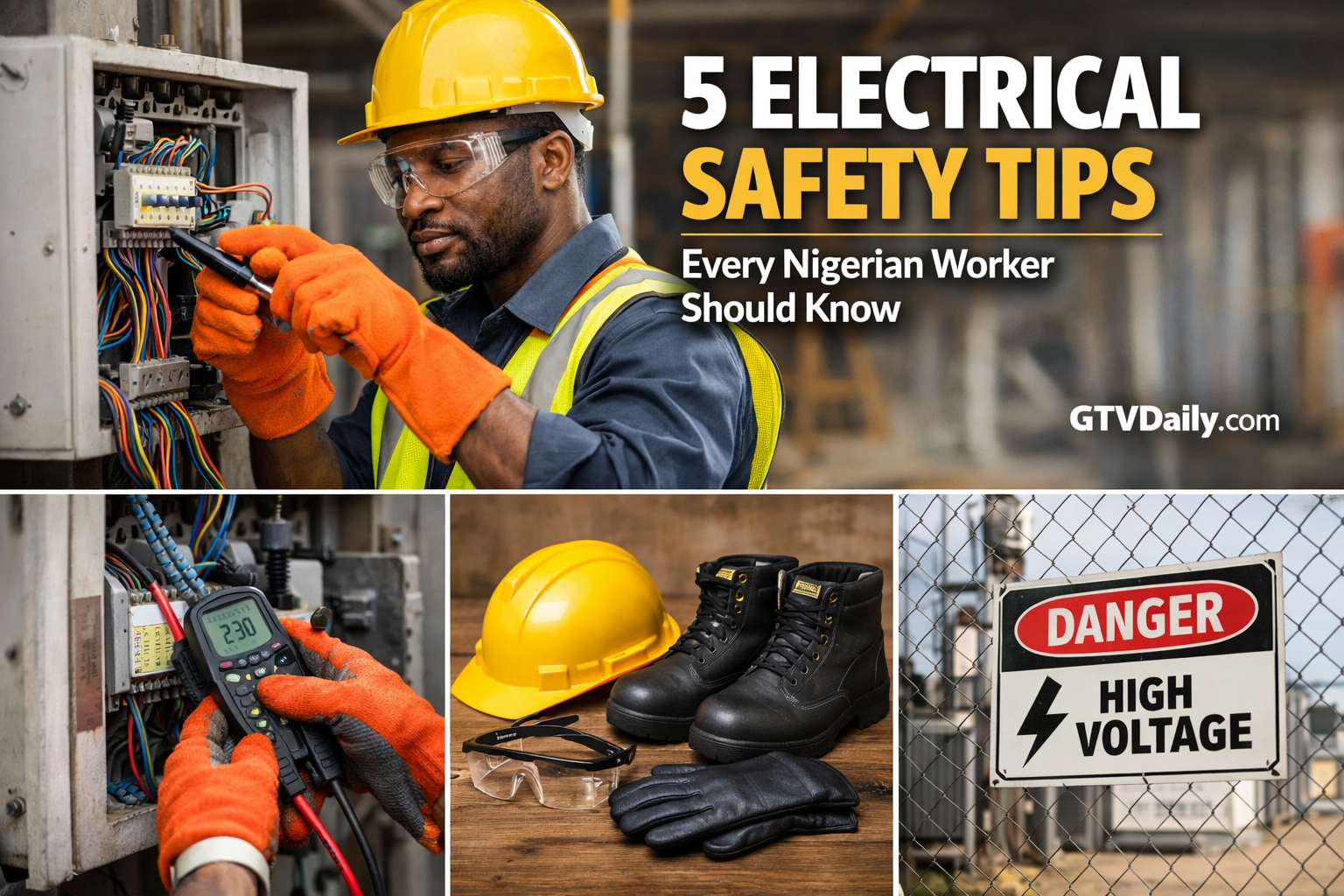
5 Safety Tips Every Nigerian Worker Should Know Before Handling Electricity
Introduction
Electricity powers our homes, offices, and industries — but it can also be deadly if not handled properly. Every year, many workers in Nigeria face injuries, accidents, or worse due to unsafe electrical practices. Whether you are an electrician, construction worker, or DIY enthusiast, knowing the right safety measures can save lives. In this article, we share five essential safety tips to protect yourself and others when working with electricity.
1. Always Turn Off the Power Source
Before you start any electrical work, switch off the main power supply. Many accidents happen when workers assume the power is off.
- Check the circuit breaker or fuse box to ensure the circuit is completely deactivated.
- Use a voltage tester to confirm that the wires are not live.
- Never rely on guesswork — always double-check.
2. Wear Proper Safety Gear
Personal protective equipment (PPE) is crucial. Electricity can cause burns, shocks, or even fatal injuries. Recommended gear includes:
- Insulated gloves and rubber-soled shoes
- Safety goggles to protect eyes from sparks
- Protective clothing (long sleeves, non-conductive materials)
Even if the task seems minor, protective gear can make the difference between a minor shock and a serious injury.
3. Use the Right Tools
Using the correct tools reduces risk and makes the job safer:
- Insulated screwdrivers and pliers
- Voltage testers and multimeters
- Ladders made of non-conductive materials (wood or fiberglass)
Never improvise with damaged tools or conductors. Faulty equipment is a common cause of accidents in the workplace.
4. Maintain Safe Distances
Electricity can jump through air gaps if voltage is high. Always maintain safe distances from live wires:
- Keep yourself at least one meter from exposed high-voltage wires.
- Avoid touching metal surfaces while working with electricity.
- Never work in wet conditions — water conducts electricity and increases risk.
5. Never Work Alone
Even experienced electricians need a buddy system:
- Have someone nearby who can switch off power in an emergency.
- In case of an accident, the helper can call for help immediately.
- Teamwork reduces the risk of fatal incidents.
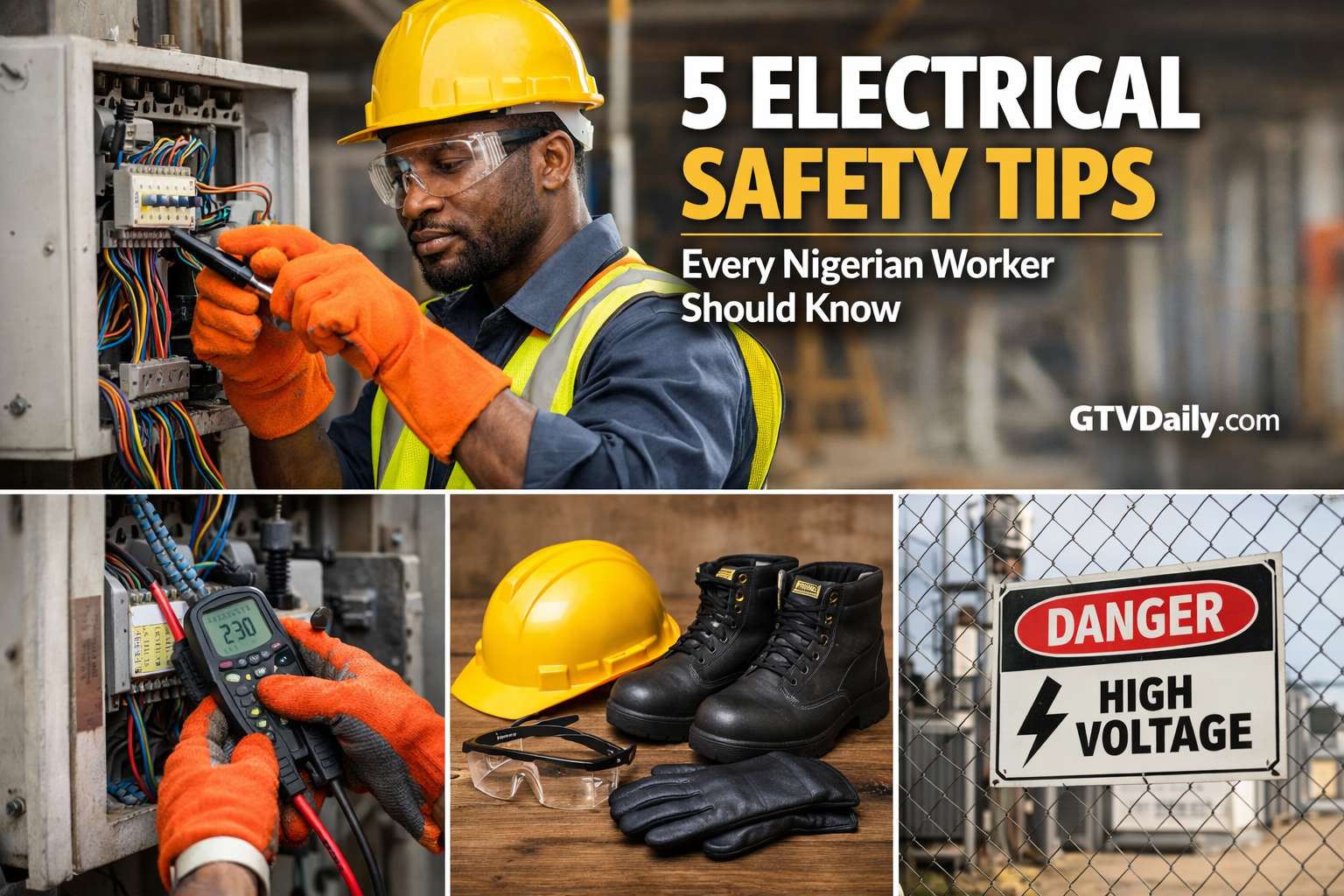
Bonus Tips for Everyday Electrical Safety
- Label circuits clearly to avoid confusion
- Regularly inspect electrical equipment for wear and tear
- Educate others about electrical hazards — safety awareness saves lives
Conclusion
Electricity is powerful, but it is also dangerous when mishandled. Following these five safety tips — turning off the power, wearing PPE, using the right tools, keeping safe distances, and never working alone — can prevent accidents and protect lives.
Stay safe, stay alert, and always respect the power of electricity.