How to Produce White Emulsion Paint: Materials, Measurements and Step-by-Step Guide
Paints are widely used in the construction and manufacturing industries for decoration, protection, and identification of surfaces. They help protect buildings and materials from environmental damage while also improving their appearance.
Generally, paints can be classified into two major categories:
1. Water-Based Paints
These are paints in which water is used as the main solvent during production. They are easy to apply, environmentally friendly, and dry quickly.
Examples include:
- Emulsion Paint
- Flex Paint
- Flexcote
- Texcote
- Satin Paint
2. Oil-Based Paints
Oil-based paints use petrol, kerosene, or other organic solvents as the liquid component. They are water-resistant and are commonly used for surfaces that require strong durability.
A common example is:
- Gloss Paint
Types of Paint
Some common types of paint used in building and decorative finishing include:
- Emulsion Paint
- Flex Paint
- Flexcote
- Gloss Paint
- Texcote
- Satin Paint
- Marble Trowel Paint
Although there are many types of paint, this guide focuses on how to produce White Emulsion Paint, which is one of the most widely used paints for interior wall decoration.
Raw Materials and Measurements for White Emulsion Paint
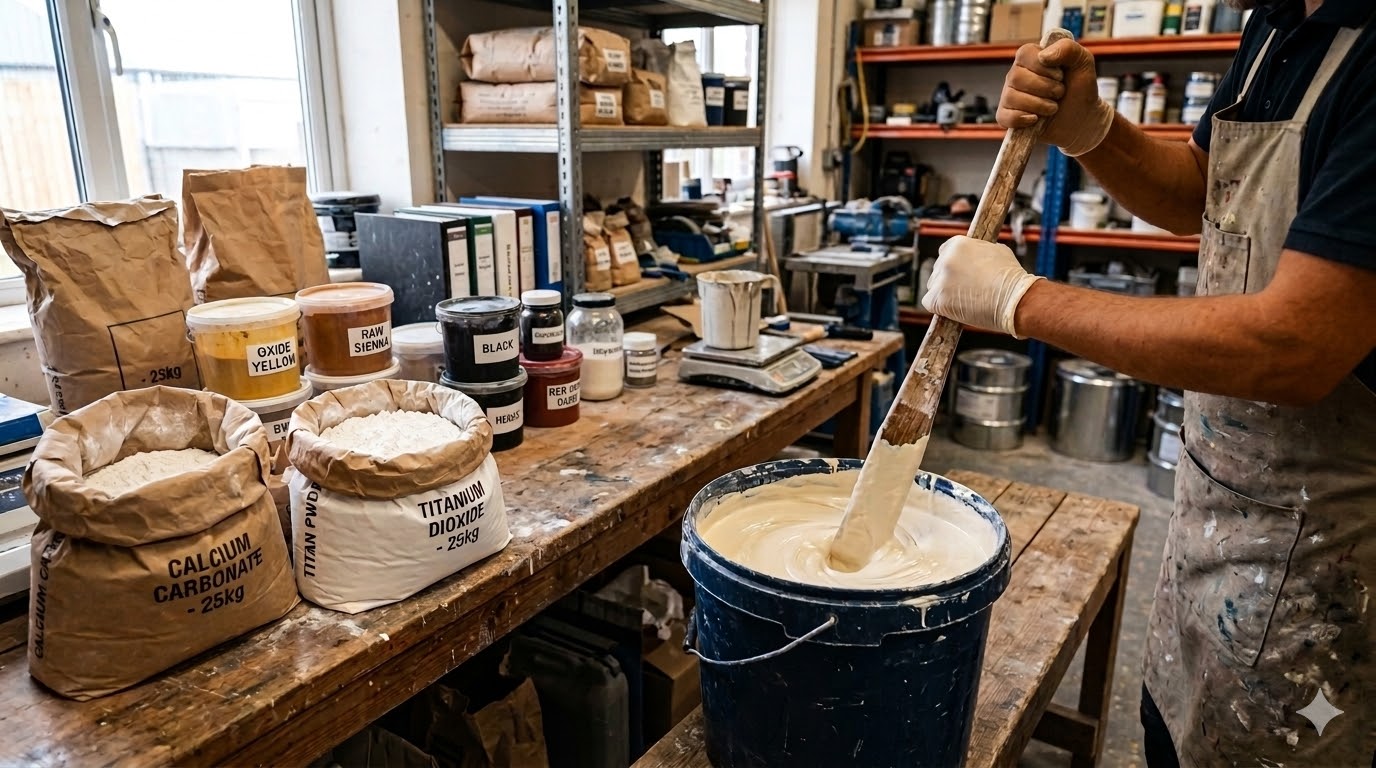
Below is a simple formulation for producing 20Litres of white emulsion paint.
- Clean Water — 10 litres
- Silicate — 200 grams (optional)
- Titanium Dioxide (Titan) — 500 grams (0.5 kg)
- Calcium Carbonate — 15 kg
- White Kaolin — 1 kg (optional)
- PVA (Polyvinyl Acetate (Binder) — 1.5 kg
- Nitrosol (Thickener) — 15 grams
- Genepor — 20 ml
- Formalin — 20 ml
- Ammonia — 20 ml
Functions of the Materials
Water
Water acts as the main solvent in the production of emulsion paint. It helps dissolve and mix all the chemical components.
Silicate (Optional)
Silicate helps increase the brightness and whiteness of white emulsion paint. It is mostly used when producing white paints to enhance the final appearance.
Titanium Dioxide (Titan)
Titanium dioxide is the primary white pigment in paint. It provides strong whiteness and covering ability.
Calcium Carbonate
Calcium carbonate is the main filler material used in paint production. It gives the paint body and increases volume.
White Kaolin (Optional)
Kaolin improves the smoothness, stability, and coverage of the paint.
PVA (Binder)
PVA acts as the binder that holds all paint components together and ensures the paint adheres well to wall surfaces.
Nitrosol
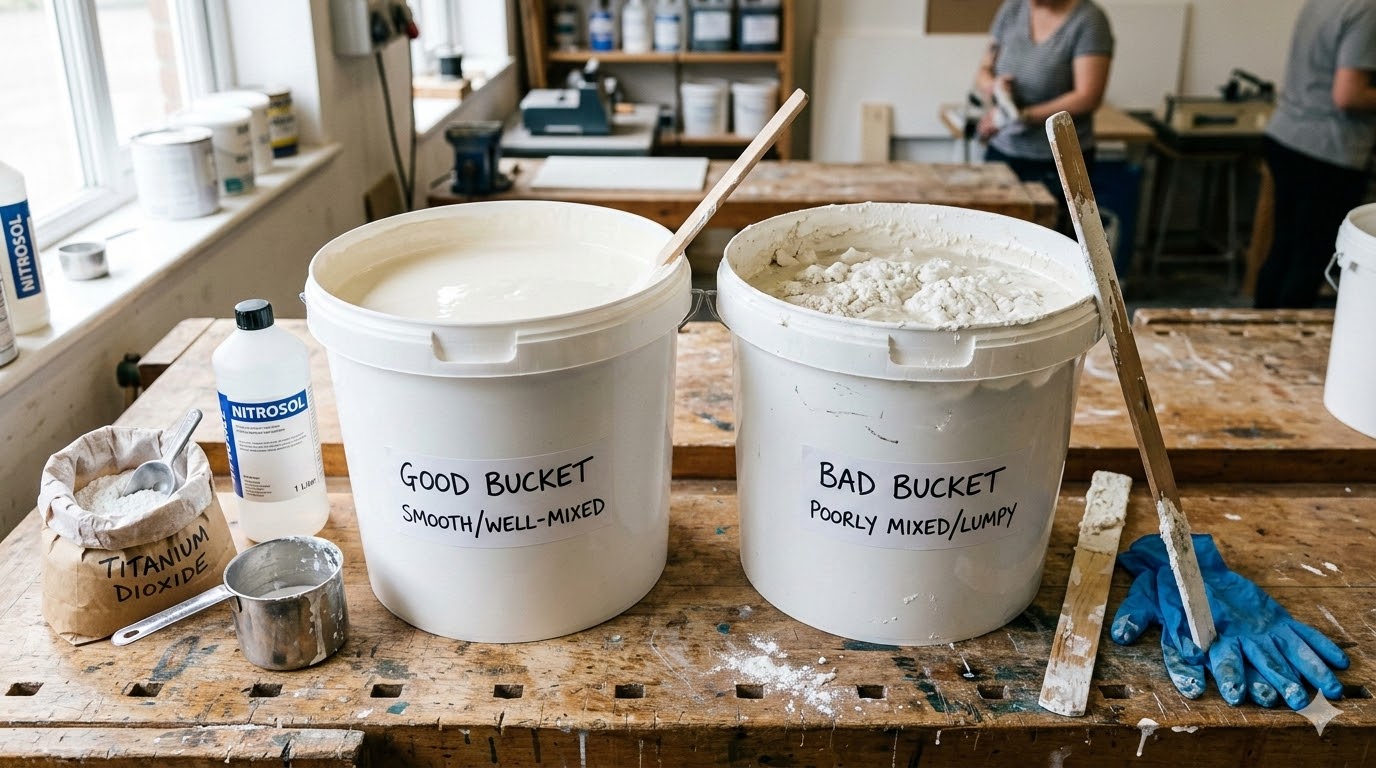
Nitrosol functions as a thickening agent. It helps achieve the desired viscosity and improves paint consistency.
Genepor
Genepor helps control foaming during mixing and improves the smoothness of the paint.
Formalin
Formalin serves as a preservative, preventing bacterial growth and extending the shelf life of the paint.
Ammonia
Ammonia helps stabilize the paint mixture and adjust its pH level, improving the final quality.
Equipment Needed
The following tools are required for producing emulsion paint:
- Mixing drum or plastic container
- Manual mixer or mixing shaft
- Weighing scale
- Measuring cup for liquids
- Packaging buckets
- Paint brush or roller for testing
Step-by-Step Procedure for Producing White Emulsion Paint
Step 1: Add Water
Pour 10 litres of clean water into a mixing drum or container.
Step 2: Add Titanium Dioxide
Add 500 grams of titanium dioxide (Titan) and mix thoroughly to disperse the pigment.
Step 3: Add Silicate (Optional)
Add 200 grams of silicate and stir properly.
Step 4: Add Calcium Carbonate
Gradually add 15 kg of calcium carbonate while mixing continuously to prevent lumps.
Step 5: Add White Kaolin (Optional)
Add 1 kg of white kaolin and continue mixing until the mixture becomes smooth.
Step 6: Add PVA (Binder)
Slowly add 1.5 kg of PVA while stirring continuously. The binder helps improve adhesion and durability.
Step 7: Prepare and Add Nitrosol
Dissolve 15 grams of Nitrosol in a small quantity of water separately.
After it dissolves properly, pour it into the mixture while stirring continuously.
Step 8: Add Genepor
Add 20 ml of Genepor (to help control foam during mixing) and keep stirring
Step 9: Add Formalin
Add 20 ml of Formalin to preserve the paint and prevent microbial growth.
Step 10: Add Ammonia
Finally, add 20 ml of Ammonia and mix thoroughly.
Continue mixing for 5–10 minutes until the paint becomes smooth, uniform, and lump-free.
Testing the Paint
Before packaging the paint, test it by applying a small amount on a wall surface using a brush or roller.
Check the following:
- Smoothness
- Coverage
- Adhesion
- Drying time
If necessary, small adjustments can be made to improve consistency.
Packaging and Storage
After successful testing:
- Package the paint in clean plastic buckets or containers
- Seal tightly to prevent contamination
- Store in a cool, dry environment
Properly preserved emulsion paint can remain usable for several months.
Safety Precautions in Paint Production
When producing paint, it is very important to observe proper safety measures because some of the chemicals used can cause irritation if handled improperly.
1. Ammonia
Ammonia has a strong, sharp, and choking smell. If it gets directly into your nose, it can make you sneeze uncontrollably and feel uncomfortable.
2. Formalin
Formalin is another chemical that should be handled carefully. It has a choking effect when inhaled directly and can irritate the eyes.
When exposed to formalin fumes, it may feel similar to tear gas, causing the eyes to water and creating a peppery sensation.
Safety Tips
To reduce exposure to these chemicals (Ammonia and Formalin:
- Always produce paint in a well-ventilated or open space
- Avoid direct inhalation of chemicals
- Wear protective gear such as nose masks, gloves, and protective clothing
- Handle chemicals carefully and store them properly
Following these safety precautions will help ensure a safer and more comfortable paint production process.
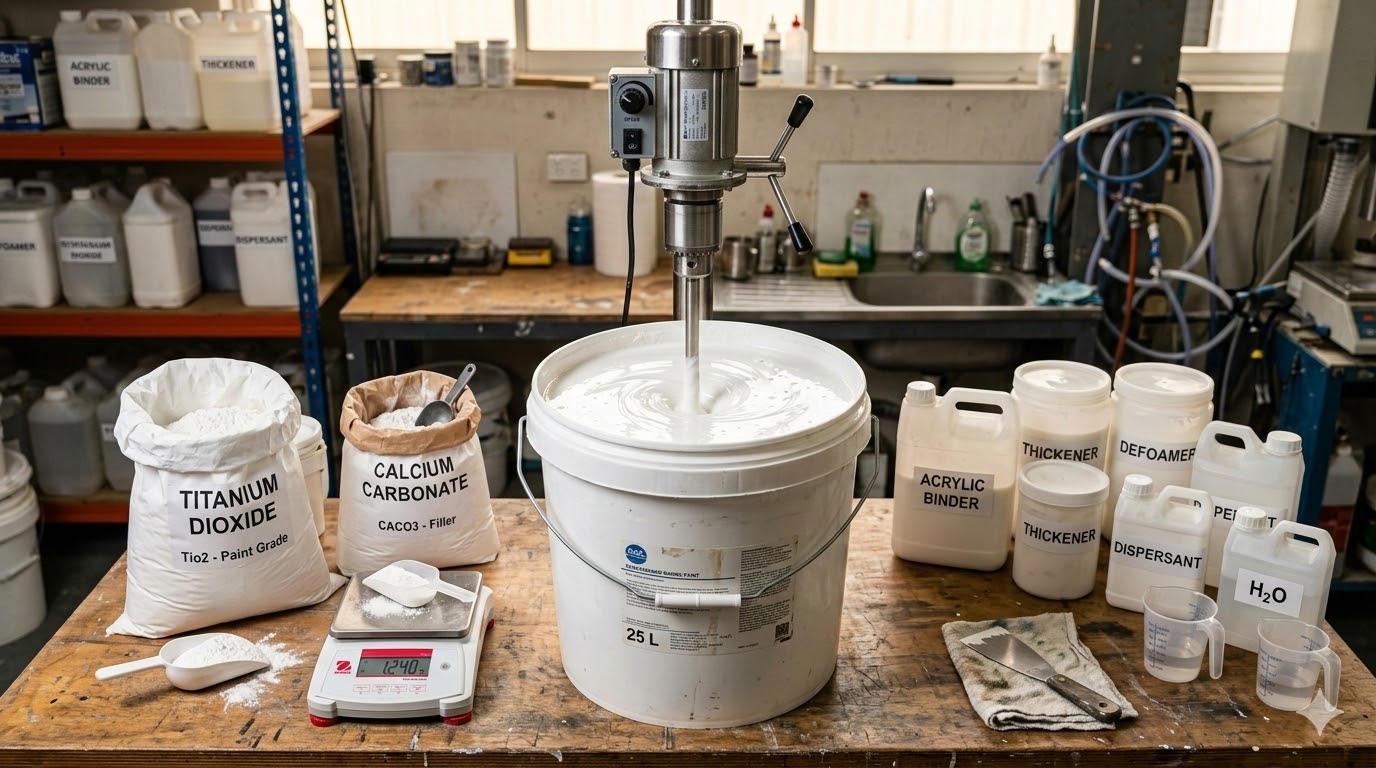
Featured image AI-generated. Learn more here