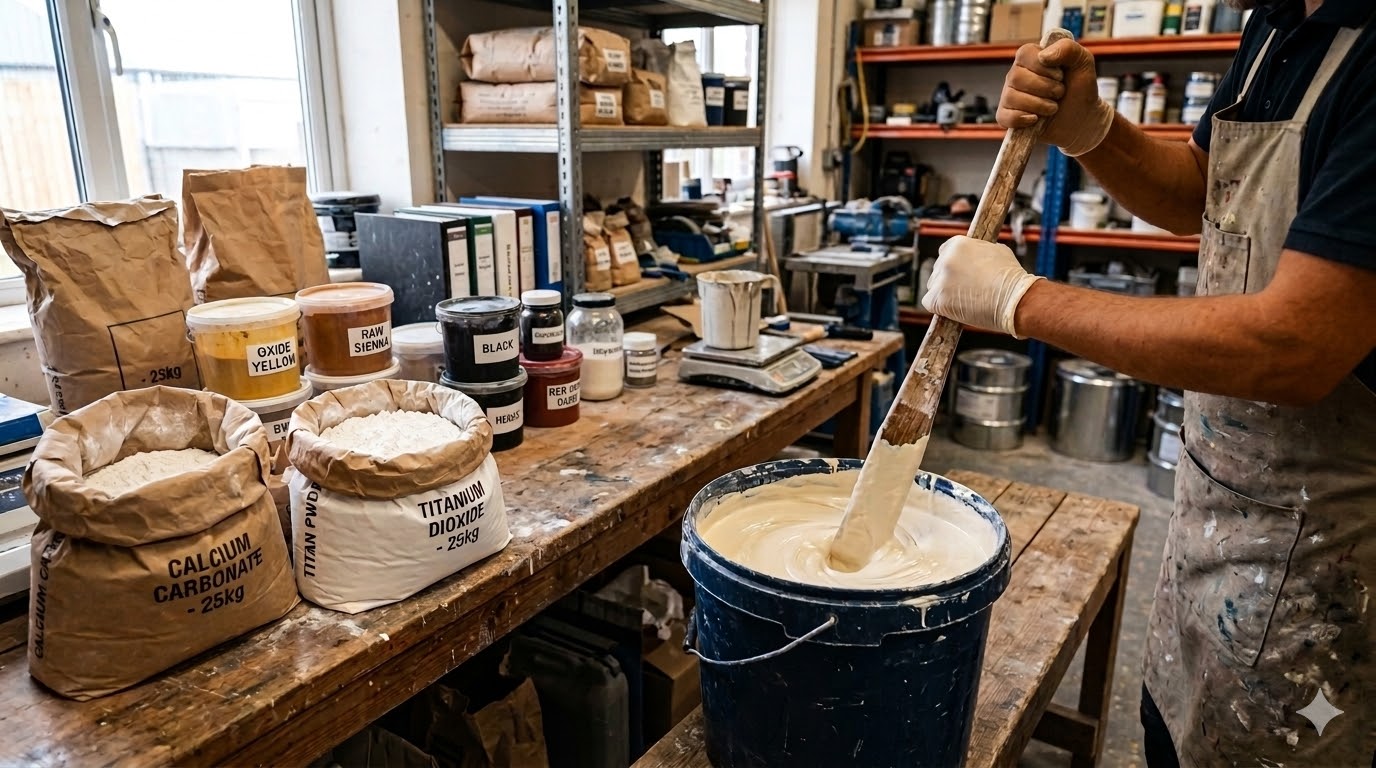
How to Produce Cream Colour Emulsion Paint (20 Litres)
Paint production is a profitable skill that anyone can learn with the right knowledge and materials. Paint is widely used in building and interior decoration, making it a high-demand product in the construction industry.
There are different types of paints used for various purposes. Some common types include:
- Emulsion Paint
- Flex Paint
- Flexcote
- Gloss Paint
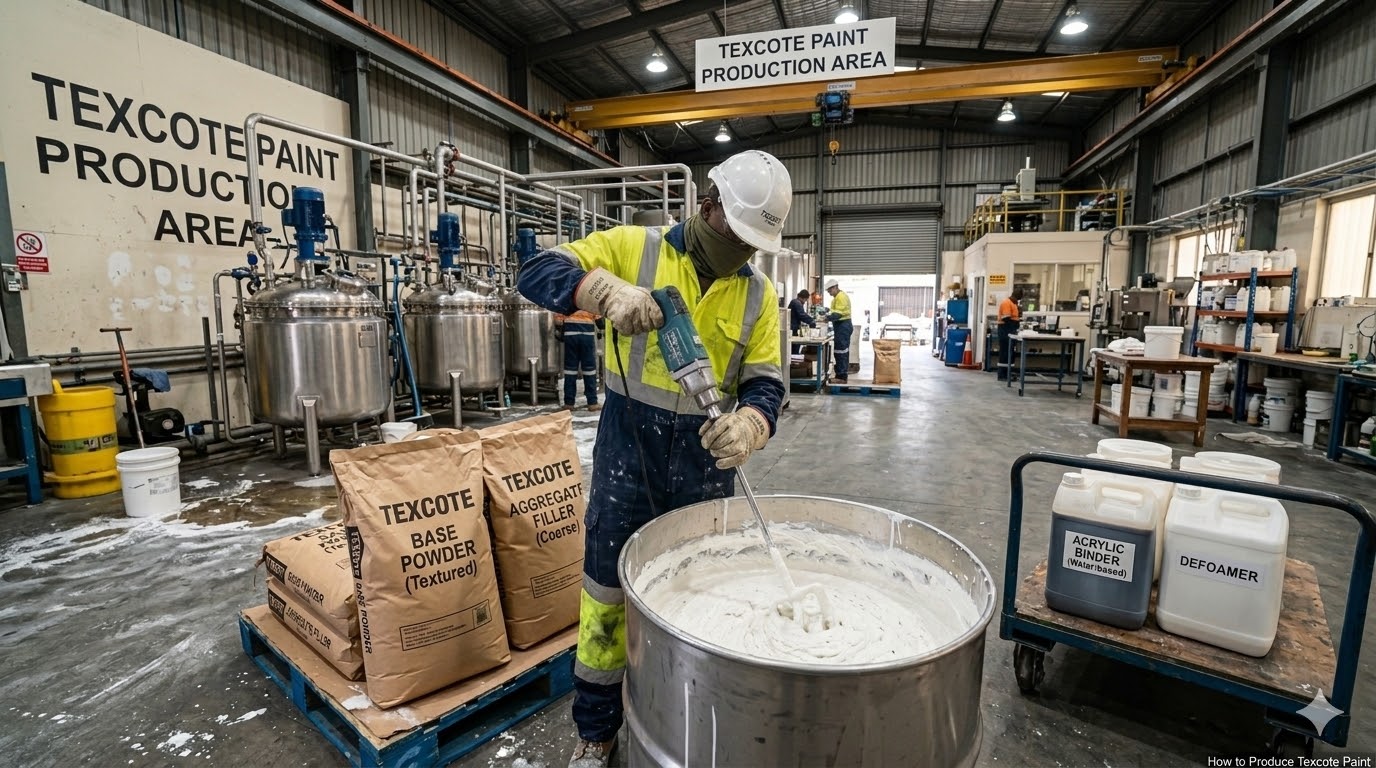
- Texcote
- Gloss Paint
- Texcote
- Satin Paint
- Marble Trowel Paint
These paints are broadly classified into water-based paints and oil-based paints.
Examples of water-based paints include emulsion, satin paint, flex paint, and flexcote, while gloss paint is an example of oil-based paint.
In this guide, we will focus specifically on how to produce cream colour emulsion paint.
Materials Needed for Cream Colour Emulsion Paint (20 Litres)
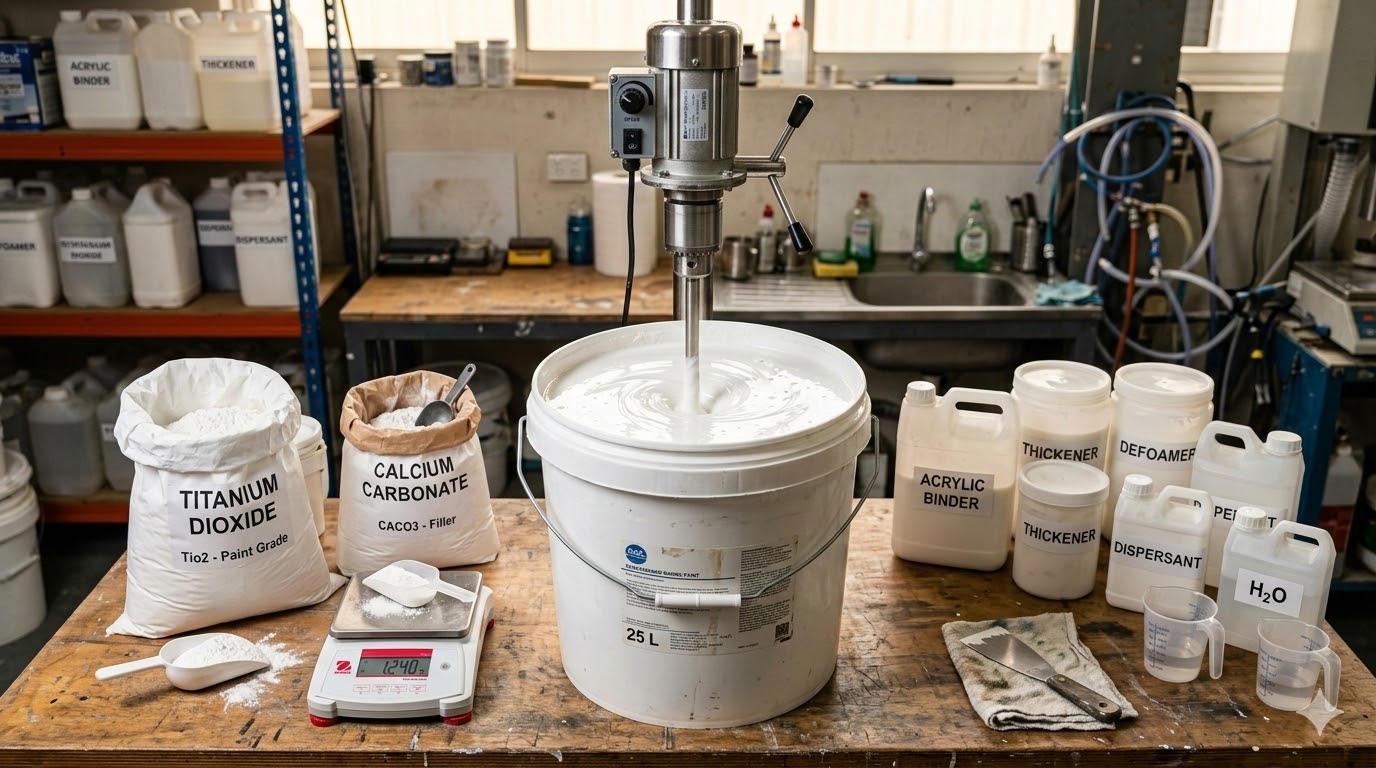
To produce 20 litres (1 drum) of cream colour emulsion paint, you will need the following materials:
- Clean Water – 10 Litres
- Calcium Carbonate – 15 Kg
- Titanium Dioxide (Titan) – 500 grams
- PVA (Binder) – 1.5 Kg
- Nitrosol (Thickener) – 15 grams
- Formalin – 100 mls
- Ammonia – 100 mls
- Genepor – 20 mls
- Yellow Oxide – Used as pigment to produce the cream colour
Production Procedure
Follow the steps below carefully when producing cream colour emulsion paint.
Step 1
Measure 10 litres of clean water into a mixing drum or container.
Step 2
Add Titanium Dioxide (Titan) and stir thoroughly until it dissolves properly.
Step 3
Add Yellow Oxide little by little while stirring. This pigment gives the paint its cream colour.
Step 4
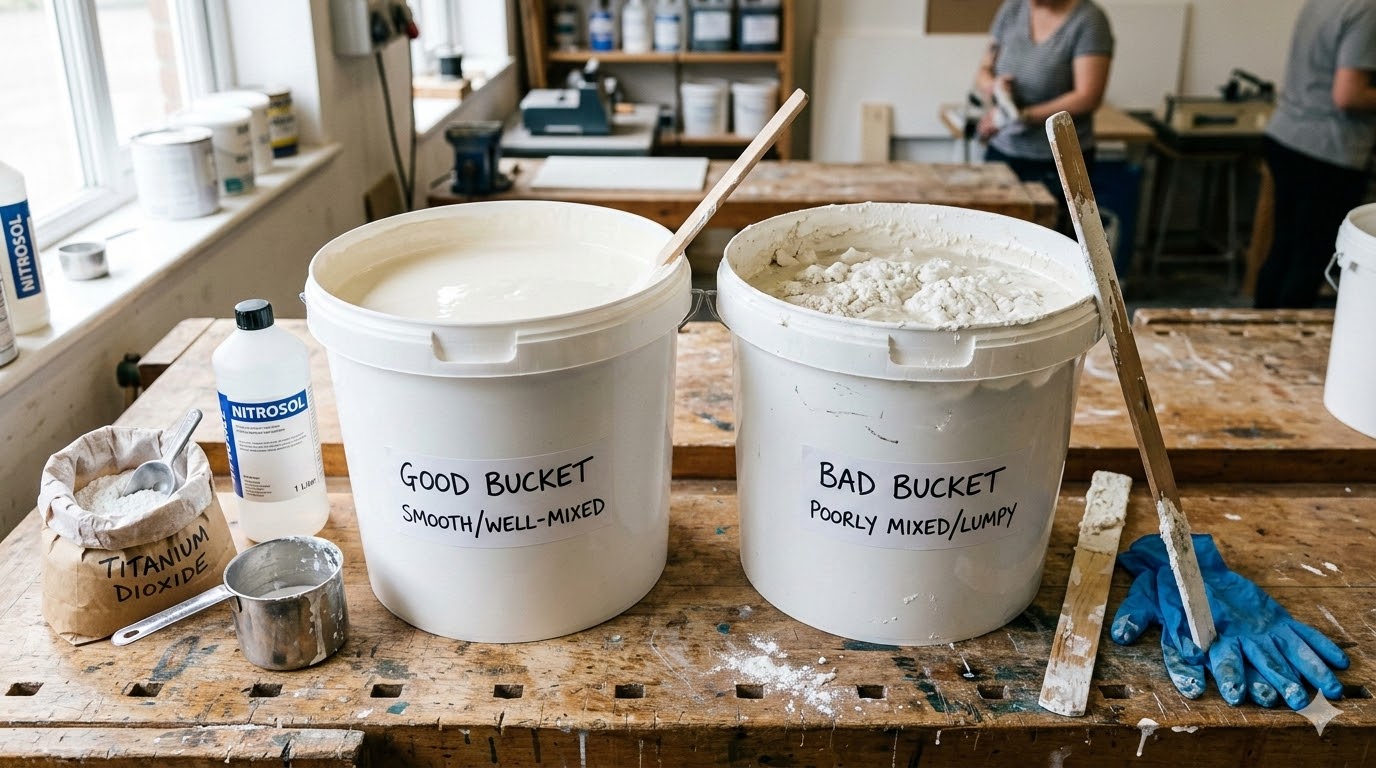
Gradually add Calcium Carbonate while stirring continuously to avoid lumps.
Step 5
Add PVA (Binder) and mix thoroughly. This helps the paint bind properly and improves adhesion to walls.
Step 6
Dissolve Nitrosol in a separate container with a little water, then pour it into the mixture and stir very well. This helps thicken the paint.
Step 7
Add Formalin and stir properly. Formalin helps preserve the paint and prevents bacteria or fungi from spoiling it.
Step 8
Add Ammonia and mix thoroughly. It helps stabilize the paint mixture.
Step 9
Add Genepor and continue stirring for about 5 minutes. Genepor helps reduce foam and improves the smoothness of the paint.
Final Step
Continue stirring the mixture until the paint becomes smooth and evenly mixed. Your cream colour emulsion paint is now ready for packaging or use.
Important Notes When Producing Colour Paint
When producing colour paint, you must first decide the exact colour you want to produce. The colour determines the type of pigment that will be used.
There are two main types of pigments used in paint production:
1. Oxide
Oxide pigments exist in powder form.
2. Paste
Paste pigments exist in liquid form.
Understanding Colour Combination in Paint Production
Some colours cannot be achieved using only one pigment. In such cases, a combination of pigments is required.
Examples include:
- Sunset Yellow – Yellow Oxide + Yellow Paste
- Grey – Black Paste + Blue Paste (depending on the shade)
The combination and quantity of pigments determine the final colour produced.
Important Colour Mixing Tip
When producing coloured paint, it is very important not to add pigment excessively.
Always add pigment little by little while stirring until you reach the desired shade.
For example, in cream colour paint production using yellow oxide:
- A very small quantity produces off-white
- A little more produces cream colour
- A larger quantity produces yellow
This means the more pigment you add, the deeper and stronger the colour becomes.
If you add too much yellow oxide when trying to produce cream paint, the colour may turn yellow instead of cream.
Conclusion
Paint production is a practical and profitable skill that can be learned with proper guidance and practice. By understanding the right materials, pigment combinations, and mixing techniques, you can produce high-quality paints for personal use or commercial purposes.
Cream colour emulsion paint is one of the easiest coloured paints to produce, making it a great starting point for beginners learning paint production.
Featured image AI-generated. Learn more here
Read Also:
• How to Produce White Emulsion Paint (Step-by-Step Guide for Beginners)
• How to Produce Texcote Paint: Complete Production Guide (4 Litres Formula)
• Top 7 High-Income Skills Anyone Can Learn in 2026
• Top 7 Side Hustles Nigerians Can Start in 2026 to Boost Income