
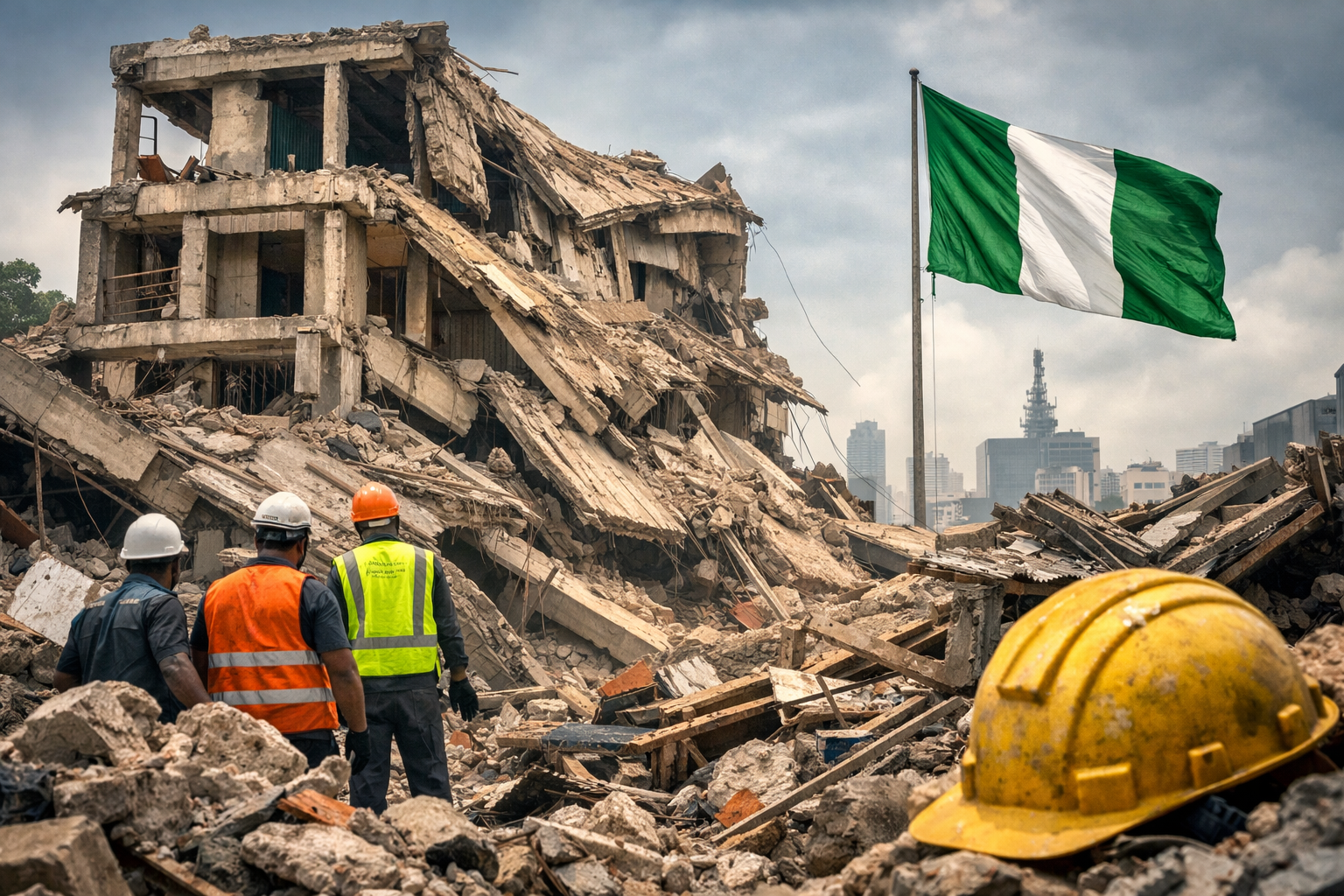
Why Building Collapse Keeps Happening in Nigeria
Building collapse has become a recurring tragedy in Nigeria, often leaving families grieving, properties destroyed, and communities shaken. Each incident raises the same painful question: why does this keep happening?
The problem goes beyond construction errors. It reflects deeper issues in regulation, materials, and oversight.
Poor Construction Practices
One of the leading causes of building collapse is substandard construction.
This includes:
- Weak foundations
- Incorrect concrete mixing ratios
- Use of low-quality reinforcement materials
- Ignoring approved building designs
When structural standards are not followed, buildings become unsafe long before they are completed.
Use of Substandard Materials
Some developers cut costs by using cheaper materials that cannot withstand structural stress.
Examples include:
- Low-grade cement
- Weak steel rods
- Poor-quality sand and aggregates
Over time, these materials fail under weight and environmental pressure.
Weak Regulatory Enforcement
Nigeria has building codes and planning regulations, but enforcement remains inconsistent.
Challenges include:
- Limited site inspections
- Corruption within approval processes
- Unapproved structural modifications
- Developers ignoring stop-work orders
Without strict oversight, unsafe structures remain standing until disaster strikes.
Rapid Urban Expansion
Cities are growing quickly, and housing demand is rising. This rush leads to:
- Overloaded land use
- Construction on unsuitable soil
- Skipping proper soil testing
Urban pressure sometimes encourages speed over safety.
Environmental Factors
Heavy rainfall, flooding, and erosion weaken structures, especially those with poor foundations.
In areas with drainage problems, water can undermine buildings, causing gradual structural damage.
Lack of Skilled Supervision
Not all construction sites have qualified engineers supervising work. When skilled professionals are absent:
- Technical mistakes go unnoticed
- Safety checks are skipped
- Structural defects remain hidden
Why This Matters
Building collapse is not just an engineering issue — it is a public safety crisis.
Consequences include:
- Loss of lives
- Long-term trauma for survivors
- Economic losses
- Reduced public trust in construction safety
Read also about a woman whose hair got pulled into a pepper grinding machine.
What Needs to Change
Experts point to key solutions:
- Stronger building inspections
- Enforcement of construction standards
- Use of certified materials
- Public awareness on safe building practices
- Accountability for developers and contractors
Safety must take priority over speed and cost-cutting.
Final Thought
Buildings should protect lives, not endanger them. Preventing collapse requires coordinated effort from developers, regulators, engineers, and communities. Without systemic change, the cycle of avoidable tragedies may continue.