
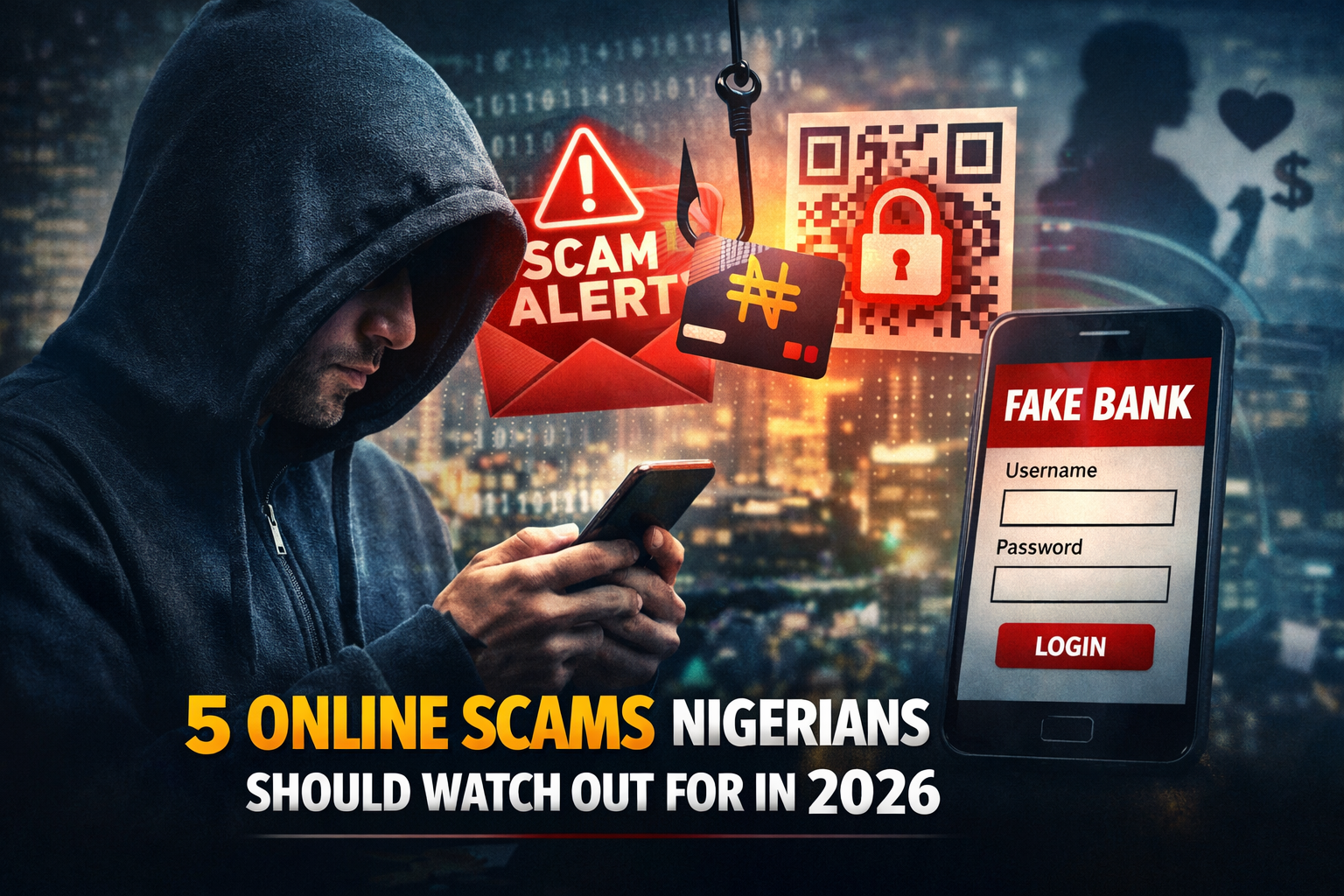
5 Common Online Scams Nigerians Should Watch Out for in 2026
As internet access and digital banking continue to expand across Nigeria, online fraud is becoming more sophisticated. With more people relying on smartphones for payments, shopping, and communication, cybercriminals are adapting their methods to exploit digital vulnerabilities.
Cybersecurity experts note that as digital transactions increase, fraud attempts often follow similar growth patterns. This makes public awareness an essential part of fraud prevention.
In 2026, understanding how common scams operate can help Nigerians better protect their finances and personal information.
Below are five online scams to watch out for and practical steps to reduce your risk.
1. Phishing Messages and Fake Bank Alerts
Phishing remains one of the most widespread digital threats. Fraudsters send SMS messages, emails, or direct messages that appear to come from legitimate banks or financial institutions. These messages typically claim there is an urgent issue with your account and encourage you to click a link to “verify” your information.
The link often leads to a fake website designed to capture login credentials, PINs, or one-time passwords.
How to protect yourself:
- Avoid clicking links from unsolicited messages.
- Access your bank only through its official website or mobile app.
- Never share your password, PIN, or OTP with anyone.
2. Fake Investment and High-Return Schemes
Online investment scams continue to attract victims with promises of unusually high or guaranteed returns within a short period. These platforms may use persuasive testimonials and referral incentives to appear credible.
In many reported cases, such platforms shut down unexpectedly, leaving participants unable to access their funds.
How to protect yourself:
- Be cautious of investments that promise guaranteed profits.
- Conduct independent research before committing funds.
- Verify whether the company is registered with relevant financial authorities.
3. Fake Online Shopping Platforms
As e-commerce grows in Nigeria, fraudulent online stores have also increased. Scammers create convincing websites or social media pages offering products at heavily discounted prices to attract quick payments.
After payment is made, customers may receive counterfeit items or no delivery at all.
How to protect yourself:
- Purchase from reputable and well-reviewed platforms.
- Confirm seller credibility before making transfers.
- Be cautious of deals that appear significantly below market value.
4. Romance and Social Media Scams
Romance scams are increasingly reported on social media and messaging platforms. In these cases, fraudsters build emotional connections over time and later request financial assistance, often citing emergencies or travel-related issues.
These scams rely heavily on emotional manipulation and trust-building.
How to protect yourself:
- Exercise caution when forming online relationships.
- Avoid sending money to individuals you have not met in person.
- Pay attention to inconsistencies in stories or repeated financial requests.
5. QR Code Payment Scams
With the rise of digital payments, QR code fraud is emerging as a new threat. Scammers may place fake QR code stickers over legitimate ones in public places. When scanned, payments are redirected to unauthorized accounts.
As QR code usage increases, awareness of this tactic becomes more important.
How to protect yourself:
- Inspect QR codes carefully before scanning.
- Avoid codes that appear tampered with.
- Use trusted payment applications and official merchant channels.
Practical Digital Safety Habits for 2026
Beyond recognizing specific scams, adopting safe online practices can significantly reduce your risk:
- Use strong, unique passwords for different accounts.
- Enable two-factor authentication where available.
- Monitor bank alerts and transaction notifications regularly.
- Avoid sharing sensitive personal information publicly.
- Report suspicious activity to your bank immediately.
Conclusion
Online scams continue to evolve alongside Nigeria’s growing digital economy. While technology has made financial transactions faster and more convenient, it also requires greater vigilance from users.
Staying informed, verifying information carefully, and practicing safe digital habits remain essential steps in reducing exposure to fraud in 2026.
Digital awareness is no longer optional — it is a necessary part of everyday financial security.