7 Smart Money Habits Every Nigerian Should Adopt in 2026 Nigeria’s economy
Nigeria’s economy keeps testing us — from fuel prices and naira swings to rising food costs and unpredictable power bills. In 2026, simply earning money is no longer enough. You need to manage it intelligently if you want to build real stability and stop living from hand to mouth.
Whether you’re a civil servant in Abuja, a trader in Onitsha, a techie in Lagos, or a student in Ibadan, these seven practical money habits can help you take control of your finances this year.
1. Track Every Single Expense (No Matter How Small)
That N1,500 daily okada ride, the quick Indomie and egg at night, the Netflix subscription you forgot about — they all add up fast.
Most Nigerians have no idea where their money really goes. Start tracking your expenses daily. Use a simple notebook, Google Sheets, or apps like Cowrywise, PiggyVest, or Spendee.
Pro tip: Review your spending every Sunday night. You’ll quickly spot leaks — those “small” spends that steal N30,000–N50,000 from you monthly.
Financial clarity starts with visibility. Once you see the problem, fixing it becomes easier.
2. Build a Solid Emergency Fund
Your generator can pack up. Your child can fall sick. The market can crash your small business for weeks. Life in Nigeria doesn’t give warning.
An emergency fund is your safety net. Aim to save 3–6 months of your basic living expenses (rent, food, transport, school fees, etc.).
Start small:
- Save N5,000 or N10,000 weekly if that’s what you can manage.
- Put it in a high-interest savings account or a flexible platform like PiggyVest, Risevest, or a money market fund.
Even if you start with just N2,000 weekly, consistency will surprise you by December.
3. Run Far Away from “Quick Profit” Schemes
If it promises 100% return in 30 days, double your money, or “guaranteed” profit with zero risk — it’s almost always a scam.
2025 taught many painful lessons. In 2026, be extra careful. Do proper due diligence before investing. If you don’t understand it, don’t touch it.
Legitimate opportunities exist (stocks, Treasury bills, crypto with caution, real businesses), but they rarely make you rich overnight. Protect your capital first.
4. Create Multiple Income Streams
One salary or one business in Nigeria today is risky. The smart ones are building side income.
Popular options in 2026:
- Freelancing (writing, graphic design, video editing, virtual assistance)
- Selling on Jumia, Jiji, or WhatsApp
- Skills like phone repairs, content creation, baking, or dropshipping
- Investing in dividend-paying assets
Even an extra N50,000–N150,000 monthly from a side hustle can change your life.
5. Kill Lifestyle Inflation Before It Kills
Got a promotion or new client? Congratulations.
Now resist the urge to immediately upgrade your car, move to a bigger apartment, or start “flexing” on Instagram. This is how many middle-class Nigerians stay broke despite good income.
Enjoy your money — but keep lifestyle upgrades below your income growth. Let the difference go into savings and investments.
6. Master Digital Financial Tools (But Use Them Safely)
Opay, PalmPay, Kuda, Moniepoint, and others have made money management easier than ever. Use them.
Set up automatic savings, track spending in the app, and earn interest on your money. But stay sharp:
- Never share your PIN or OTP
- Enable biometric login and two-factor authentication
- Verify every transaction immediately
Digital tools are powerful servants but terrible masters. Use them wisely.
7. Set Clear, Written Financial Goals
Don’t just say “I want to save.” Write it down.Examples:
- Buy land in Ibeju-Lekki by December 2027
- Save N3 million for business expansion
- Build N5 million retirement fund in 5 years
- Take the family to Dubai in 2026
Clear goals turn saving from punishment into a mission. Review your goals every three months and adjust where necessary.
Why These Habits Matter More in 2026
Inflation is not disappearing soon. The naira will keep facing pressure. Government policies will continue to evolve. The only person who can truly protect your money is you.
Small daily habits compound into massive financial progress over time.
Frequently Asked Questions
What’s the first money habit I should start with?
Expense tracking. Everything else becomes easier once you know exactly where your money is going.
How much should I save every month?
At least 20% of your income if possible. Even 10% is better than zero. The most important thing is consistency.
Are digital banks safe in Nigeria?
Regulated ones (with CBN licenses) are generally safe when you follow security rules. Always use official apps and avoid suspicious links.
Can these habits work for low-income earners?
Yes. Many people earning below N100,000 have built impressive savings by being disciplined with small amounts.
Final Words
Smart money habits are not about being stingy — they’re about being smart. They give you options, peace of mind, and the ability to sleep better at night knowing you’re in control.
Start with just one or two habits this week. Don’t try to do everything at once. Progress beats perfection.
The economy may be tough, but Nigerians who take charge of their money will always come out stronger.
Which of these seven habits will you start first? Drop your answer in the comments.
Share this with someone who needs it — your friend, sibling, or colleague might thank you later.
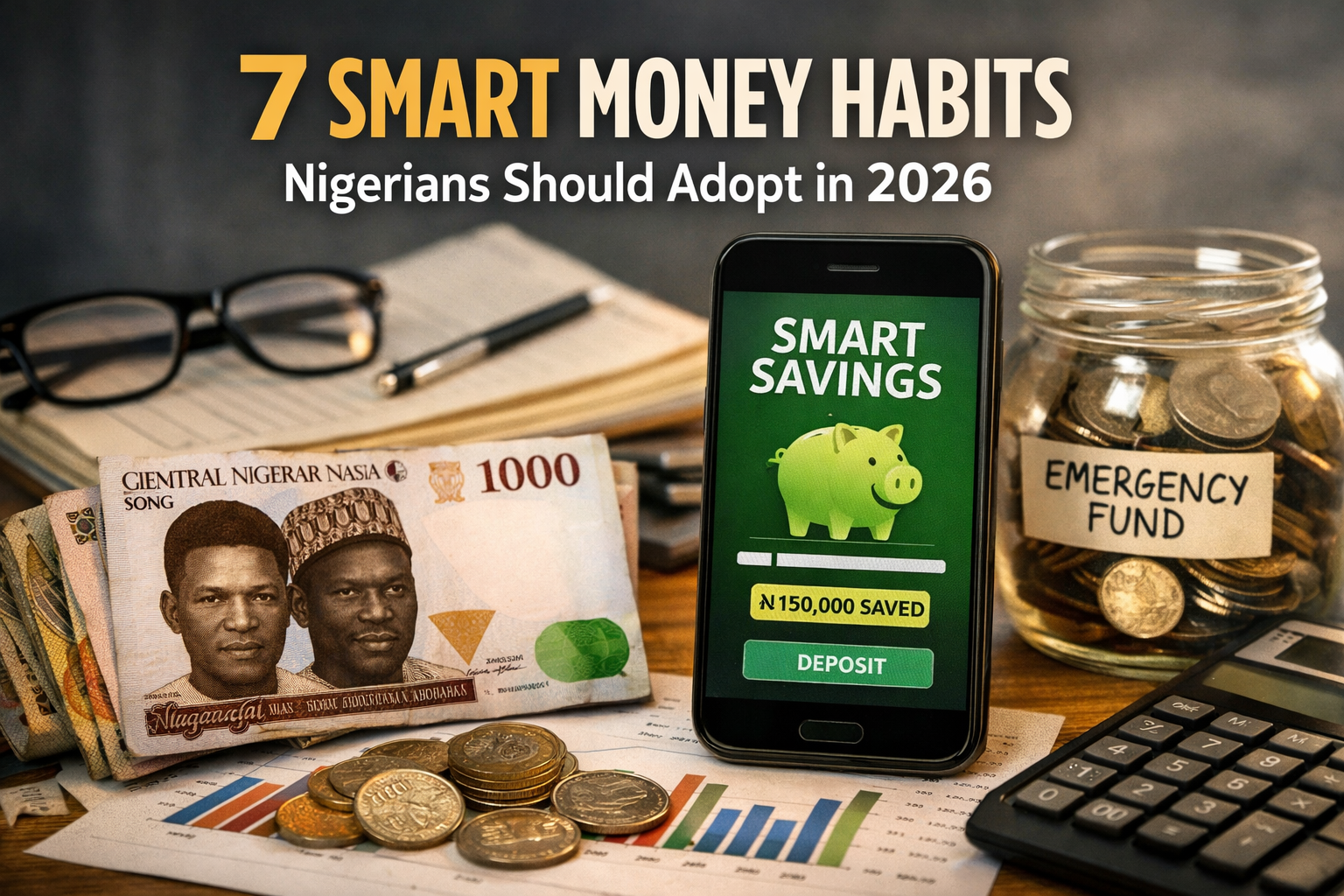
Featured image AI-generated. Learn more here