
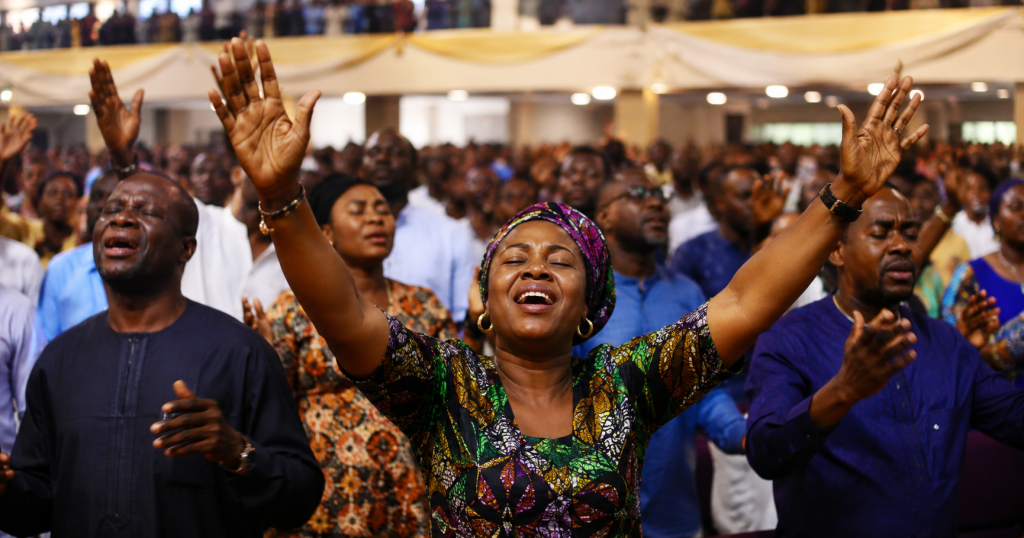
Christianity was never designed to be a solitary pursuit. From the very beginning God’s design for his people has been community — a gathered people living in relationship with each other and with him, bearing each other’s burdens, celebrating each other’s joys and growing together in faith and character. The church is not an optional add-on to personal faith. It is the God-designed environment in which faith is nurtured, character is formed and God’s purposes in the world are advanced.
Yet in contemporary culture the idea of committed church community is increasingly countercultural. Many people identify as spiritual but not religious, preferring personal spirituality to institutional community. Many Christians attend church irregularly or have drifted away from meaningful church involvement altogether. The rise of online church during and after the Covid pandemic gave many believers a comfortable alternative to physical community that, while valuable in certain circumstances, cannot fully replace the richness of embodied Christian community.
This article makes the case for committed Christian community — not as a religious obligation but as a gift and necessity that every believer needs for genuine spiritual health and fruitfulness.
God’s Design for Community
The testimony of Scripture from beginning to end is that God is a communal God who creates communal people. The Trinity itself — Father Son and Holy Spirit existing in eternal relationship — reveals that community is not merely a human convenience but a reflection of God’s own nature. We are created in the image of a relational God and we bear that relational image most fully when we live in genuine community with others.
From the calling of Abraham and his family, through the formation of Israel as a covenant people, through Jesus gathering twelve disciples to live in community with him, through the establishment of the early church in Acts, the consistent pattern of God’s working in the world is through communities of people rather than isolated individuals.
Hebrews 10:24-25 provides one of the New Testament’s clearest instructions regarding Christian community — let us consider how we may spur one another on toward love and good deeds not giving up meeting together as some are in the habit of doing but encouraging one another and all the more as you see the day approaching. This instruction to not give up meeting together is not a suggestion — it is a direct command grounded in the recognition that believers need each other.
What Christian Community Provides
Genuine Christian community provides things that cannot be obtained in isolation. Understanding what we lose when we neglect community helps us appreciate its value and prioritize our participation in it.
Accountability is one of the most important gifts of Christian community. We are all prone to self-deception — to blind spots in our own character and behavior that we cannot easily see from the inside. Trusted fellow believers who know us well and love us enough to speak truth into our lives provide the accountability that helps us grow in character and avoid the spiritual drift that so easily overtakes the isolated Christian.
Encouragement is another vital gift of community. The Christian life involves real difficulties — seasons of doubt, spiritual dryness, painful circumstances and the daily challenge of living faithfully in a world that does not share our values. In these seasons the encouragement of fellow believers who can remind us of God’s faithfulness and pray with us through our difficulties is invaluable. 1 Thessalonians 5:11 instructs believers to encourage one another and build each other up and this ministry of mutual encouragement is only possible in community.
Practical support is a third gift of community that the Bible takes seriously. Acts 2:44-45 describes the early church sharing their possessions so that no one was in need. James 2:14-17 challenges believers whose faith produces no practical care for those in need. The Christian community is meant to be a network of genuine mutual care and support that addresses real practical needs — the community that provides meals when someone is ill, that helps financially when a family faces crisis, that provides childcare when a parent needs support.
Spiritual gifts are expressed and experienced in community. 1 Corinthians 12 describes the church as a body in which each member has different gifts that are meant to function together for the benefit of the whole. When we are absent from community we miss the blessing of gifts that God has placed in other members for our benefit and the community misses the blessing of gifts God has placed in us for their benefit.
Choosing the Right Church Community
Not all church communities are equal and finding the right community for your season of life and spiritual needs is important. Here are principles for finding a church community where you can genuinely thrive.
Look for a community where the Bible is taught faithfully and applied practically. Sound biblical teaching is the non-negotiable foundation of healthy Christian community. A church that does not ground its life and practice in Scripture is building on sand regardless of how large its congregation or how impressive its programs.
Look for a community where genuine relationships are possible. Large churches can provide inspiring worship and excellent programs but can also be difficult environments for genuine community. Whatever the size of the church the question is whether there are structures and cultures that make genuine relationships between members possible — small groups, home fellowships, ministry teams and other contexts where people can know and be known.
Look for a community where you can contribute not just receive. Healthy community involves giving as well as receiving. Find a community where your gifts, your time and your presence are genuinely needed and valued.
Commitment Is the Key
The benefits of Christian community are not available to the casual attender who shows up occasionally and maintains careful emotional distance. They are available to those who commit — who choose a specific community, invest in its relationships, serve in its ministries and weather the inevitable disappointments and conflicts that arise in any human community.
Every church community is made up of imperfect people and will therefore inevitably disappoint us at some point. The temptation when this happens is to leave and look for a better community. But the pattern of leaving every community that disappoints us leaves us perpetually in the shallow end of Christian community, never experiencing the depth of relationship that only comes through committed presence over time.
Commitment to community is not blind loyalty that ignores genuine problems or tolerates harmful behavior. It is the willingness to invest in relationships over time, to work through conflicts rather than running from them and to be the kind of member whose presence makes the community better.
The church — imperfect, human, sometimes frustrating but always God’s chosen vehicle for his purposes in the world — needs you. And you need the church. This is not a human design for religious efficiency. It is God’s design for human flourishing and Kingdom advancement.
Sources and References:
- The Holy Bible: Hebrews 10:24-25, 1 Thessalonians 5:11, Acts 2:44-45, James 2:14-17, 1 Corinthians 12
- Bonhoeffer, Dietrich. Life Together (1939)
- Ortberg, John. Everybody’s Normal Till You Get to Know Them (2003)