In February 1897 one of the greatest acts of cultural theft in human history took place in the ancient Kingdom of Benin in what is now southern Nigeria. British soldiers and naval officers looted the royal palace of the Oba of Benin, carrying away thousands of extraordinary bronze sculptures, ivory carvings and other priceless artifacts that had been created by Benin artists over centuries.
The Benin Bronzes, as they came to be known, ended up scattered across museums and private collections in Europe and America where many of them remain to this day. Their story raises profound questions about cultural ownership, colonial injustice and the responsibility of wealthy nations and institutions to right the wrongs of the past. It is one of the most important unresolved cultural justice issues in the world today.
The Kingdom of Benin and Its Art
To understand the significance of the Benin Bronzes it is necessary to understand something of the kingdom that created them. The Kingdom of Benin, not to be confused with the modern nation of Benin which is a different country, was one of the oldest and most sophisticated kingdoms in West Africa. Founded around the 11th century and reaching the height of its power between the 13th and 17th centuries, Benin was a major political, commercial and cultural force in the region.
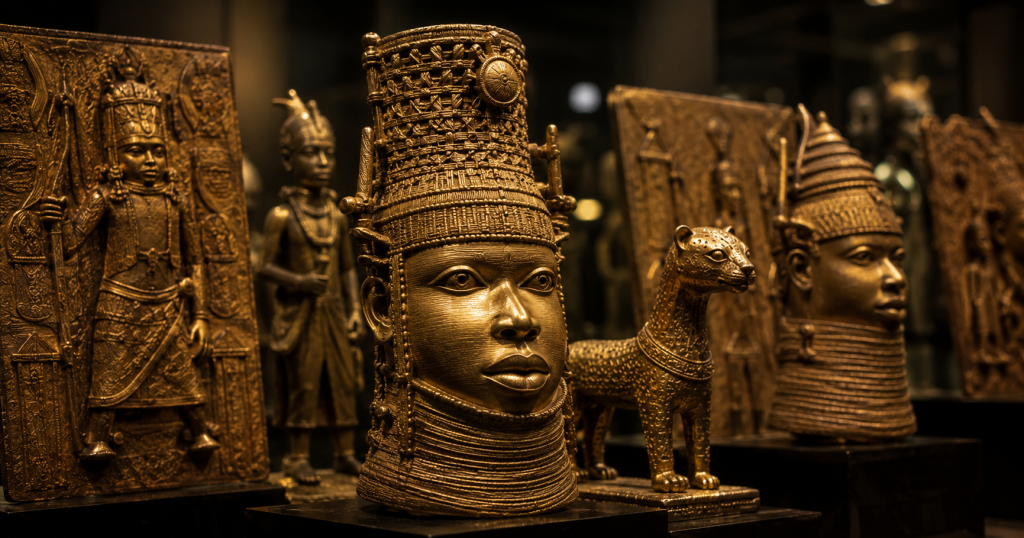
The Benin royal court developed one of the most remarkable artistic traditions in the world. Working primarily in bronze, brass and ivory, Benin artists created sculptures of extraordinary technical skill and aesthetic sophistication. The famous Benin Bronzes include plaques that decorated the royal palace walls, portraits of kings and queen mothers, ceremonial objects and figures of remarkable realism and beauty.
These works were not merely decorative. They served important religious, historical and political functions in Benin society. The bronze plaques recorded important historical events and figures. Portrait sculptures of deceased kings preserved their memory and spiritual presence. The entire body of art represented the accumulated cultural and historical memory of the Benin kingdom.
The British Punitive Expedition
The looting of Benin’s treasures took place in the context of Britain’s aggressive expansion of colonial control over West Africa in the late 19th century. The immediate trigger was the killing of a British trade delegation that attempted to visit Benin in January 1897 during a period when the Oba had specifically requested that visitors stay away due to important religious ceremonies.
The British responded by sending a large military force to Benin. The so-called Punitive Expedition attacked and captured Benin City in February 1897. The royal palace was looted and subsequently burned. Thousands of bronze sculptures, ivory carvings and other artifacts were seized by British officers and sailors.
The artifacts were brought to Britain where they were sold by the Admiralty to cover the costs of the expedition. They quickly found their way into museums, private collections and auction houses across Europe and America. The British Museum in London acquired a large collection. Other pieces went to museums in Berlin, Vienna, Leipzig and many other cities.
The Incredible Artistic Achievement
When the Benin Bronzes arrived in Europe they caused a sensation. European art experts were astonished by their technical sophistication and artistic quality. Many found it difficult to believe that African artists had created works of such refinement and skill, a reaction that spoke more to European racial prejudices than to any genuine ambiguity about the bronzes’ origin.
The Benin Bronzes demonstrated beyond any doubt that pre-colonial Africa had produced sophisticated artistic traditions comparable to anything in the European canon. The portrait sculptures in particular showed a mastery of realistic human representation that rivaled the best European Renaissance art.
The technical process used to create the bronzes, known as lost-wax casting, requires extraordinary skill and precision. The Benin guild of bronze casters, known as the Igun Eronmwon, had been perfecting this technique for centuries. Their mastery of the craft produced works that remain technically impressive even by modern standards.
The Campaign for Return
For decades after the looting, Nigeria and the descendants of the Benin royal family called for the return of the bronzes. For most of that time these calls were largely ignored by the Western museums and institutions that held the pieces.
In recent years however the campaign for the return of the Benin Bronzes has gained significant momentum. Growing awareness of the injustice of colonial looting, changing attitudes toward cultural restitution and the advocacy of Nigerian government officials and cultural organizations have put the issue firmly on the international agenda.
Some institutions have begun to respond positively. Several German museums have agreed to return significant collections of Benin Bronzes to Nigeria. The Smithsonian Institution in the United States has also committed to returning its collection. These decisions represent important acknowledgments of the injustice of the original looting and of Nigeria’s rightful ownership of its own cultural heritage.
The British Museum however, which holds one of the largest collections of Benin Bronzes in the world, has been more resistant. British law currently prevents the museum from permanently deaccessioning items from its collection, creating a legal obstacle to full restitution. Negotiations continue between the museum, the British government and Nigerian authorities over the future of these extraordinary works.
What Justice Looks Like
The story of the Benin Bronzes raises important questions about what justice requires when cultural property has been stolen. Simple return of the objects is the most straightforward form of justice and is what Nigeria and the Benin royal family have consistently demanded.
Some have proposed compromise solutions such as long-term loans of the bronzes to Nigeria while legal ownership remains with Western museums. Nigerian authorities have generally rejected such proposals as inadequate, arguing that borrowed items can always be recalled and that anything less than full restitution fails to address the fundamental injustice of colonial looting.
The Benin Bronzes case has become a touchstone for the broader debate about colonial era looting and cultural restitution. Its resolution will set important precedents for how the world deals with the cultural crimes of colonialism. The eyes of Africa and of the world are watching.
Sources and References:
- Plankensteiner, Barbara. Benin Kings and Rituals: Court Arts from Nigeria (2007)
- Coombes, Annie E. Reinventing Africa: Museums, Material Culture and Popular Imagination (1994)
- BBC News: Benin Bronzes Restitution Coverage — bbc.com
- The British Museum: Benin Collection Records — britishmuseum.org