Deep in the heart of southern Africa, surrounded by the rolling hills and vast plains of modern-day Zimbabwe, stand the ancient ruins of a city that has puzzled historians, archaeologists and explorers for centuries. Great Zimbabwe is one of the most remarkable archaeological sites in the world — a massive stone city built without mortar, without modern tools and without any written records to tell us exactly who built it, why it was abandoned and what secrets it still holds.
The story of Great Zimbabwe is a story of mystery, of remarkable human achievement and of the determined effort by colonial powers to deny that Africans could have built something so extraordinary. It is ultimately a story of African pride and the recovery of a history that was stolen and distorted.
What Is Great Zimbabwe?
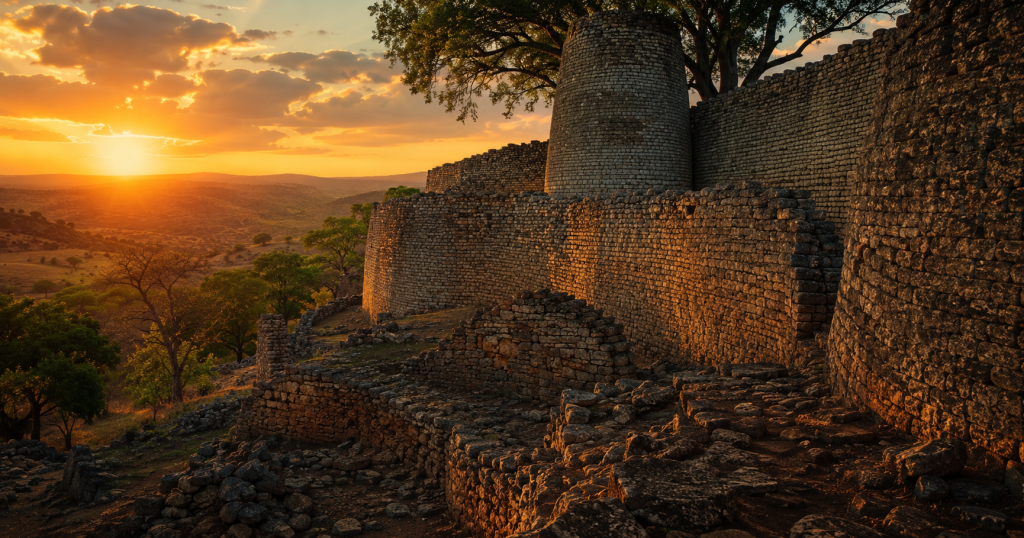
Great Zimbabwe is a ruined city located in the southeastern hills of Zimbabwe near the modern town of Masvingo. It covers an area of nearly 800 hectares and at its peak is estimated to have been home to between 10,000 and 18,000 people, making it one of the largest cities in sub-Saharan Africa during the medieval period.
The city is famous for its extraordinary stone walls, towers and enclosures built from granite blocks shaped and fitted together with remarkable precision without the use of mortar. The largest structure, known as the Great Enclosure, has walls that are up to five meters thick and eleven meters high. The construction required an estimated one million granite blocks and represents an extraordinary feat of engineering and organization.
The name Zimbabwe itself comes from the Shona language and means either “houses of stone” or “venerated houses.” The ruins give their name to the modern nation of Zimbabwe, a powerful symbol of African heritage and pride.
Who Built Great Zimbabwe?
Great Zimbabwe was built and inhabited by the ancestors of the Shona people, the dominant ethnic group of modern Zimbabwe. Archaeological evidence indicates that the site was first settled around the 4th century AD with the main stone structures being built between the 11th and 15th centuries during the height of the Kingdom of Zimbabwe.
The Kingdom of Zimbabwe was a powerful and wealthy state that controlled the gold trade between the interior of southern Africa and the trading cities of the East African coast. Gold, ivory and other goods flowed through Great Zimbabwe to coastal trading ports where Arab, Indian and later Portuguese merchants exchanged them for cloth, ceramics and other imported goods.
Archaeological excavations at Great Zimbabwe have uncovered remarkable evidence of this international trade including Chinese porcelain, Persian ceramics and Arab coins. These findings demonstrate that Great Zimbabwe was not an isolated backwater but a sophisticated city at the center of extensive regional and international trade networks.
The Colonial Denial of African Achievement
When European explorers and colonists first encountered the ruins of Great Zimbabwe in the 19th century, many of them refused to believe that Africans could have built such an impressive city. Various alternative theories were proposed attributing the construction to Phoenicians, Arabs, ancient Israelites or even visitors from a lost civilization.
These theories said more about the racial prejudices of their proponents than about the actual history of Great Zimbabwe. The idea that sub-Saharan Africans were incapable of building sophisticated cities and states was central to the ideology used to justify colonialism and racial discrimination.
When archaeologist David Randall-MacIver concluded in 1905 based on careful examination of the archaeological evidence that Great Zimbabwe was unquestionably of African origin and medieval date, his findings were met with fierce resistance from many in the colonial establishment. It took decades of further research before the African origin of Great Zimbabwe was accepted as established historical fact.
During the era of white minority rule in Rhodesia, as Zimbabwe was then known, the government actually suppressed and censored archaeological findings that confirmed the African origin of Great Zimbabwe. Museum guides were instructed not to attribute the ruins to African builders. This extraordinary attempt to rewrite history in real time speaks volumes about the political stakes involved in the question of who built Great Zimbabwe.
The Decline and Abandonment of Great Zimbabwe
At its height in the 14th century Great Zimbabwe was a thriving city and the capital of a powerful kingdom. Yet by the mid-15th century the city had been largely abandoned. The reasons for its decline and abandonment remain a subject of debate among historians and archaeologists.
The most widely accepted explanation involves a combination of factors including environmental degradation, the exhaustion of local resources particularly firewood and agricultural land, political instability and the shifting of trade routes. As the city’s population grew it put increasing pressure on the surrounding environment eventually making it impossible to sustain such a large population in one location.
The decline of Great Zimbabwe did not mean the end of the civilization that built it. The Shona people and their kingdoms continued to flourish in the region with new centers of power emerging at sites like Khami and Danangombe. The tradition of stone building that produced Great Zimbabwe continued for centuries after the city’s abandonment.
Great Zimbabwe Today
Today Great Zimbabwe is a UNESCO World Heritage Site and one of Zimbabwe’s most important tourist attractions. The ruins are remarkably well preserved considering their age and continue to yield new insights to archaeologists who study them.
For Zimbabweans and for Africans more broadly Great Zimbabwe is a powerful symbol of pre-colonial African achievement and sophistication. The image of the Zimbabwe Bird, a carved soapstone bird found at the site, appears on Zimbabwe’s national flag and coat of arms. It is a daily reminder that before colonialism African civilizations were capable of extraordinary achievements.
The mystery of Great Zimbabwe has not been entirely solved. Questions remain about the specific identity of its rulers, the details of its political organization and the full extent of its trade connections. But the most important mystery — who built it — has been definitively answered. Africans built Great Zimbabwe. And that fact alone is cause for pride and wonder.
Sources and References:
- UNESCO World Heritage List: Great Zimbabwe National Monument
- Pikirayi, Innocent. The Zimbabwe Culture: Origins and Decline of Southern Zambezian States (2001)
- Encyclopedia Britannica: Great Zimbabwe — britannica.com
- African Archaeological Review: Studies on Great Zimbabwe