
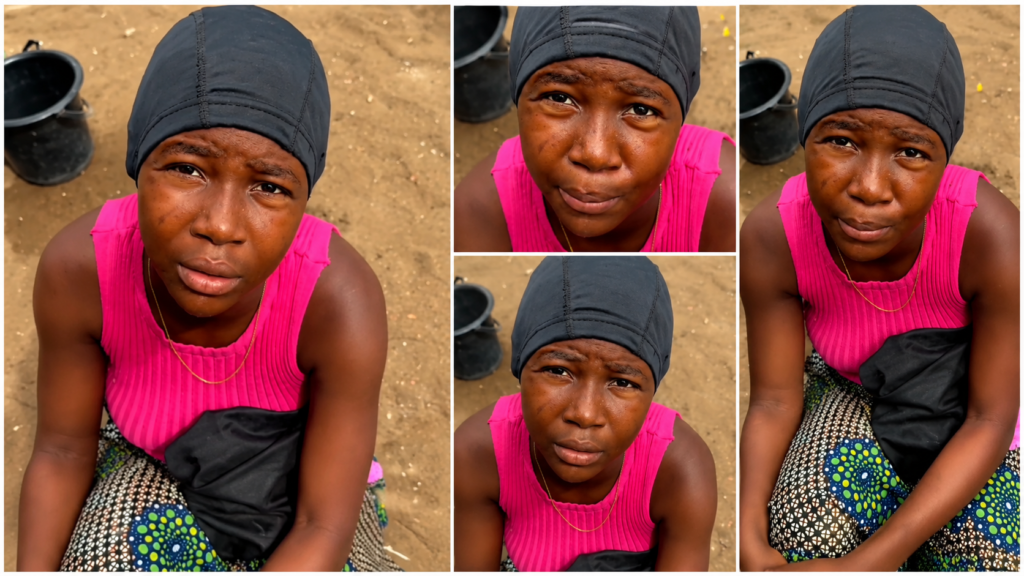
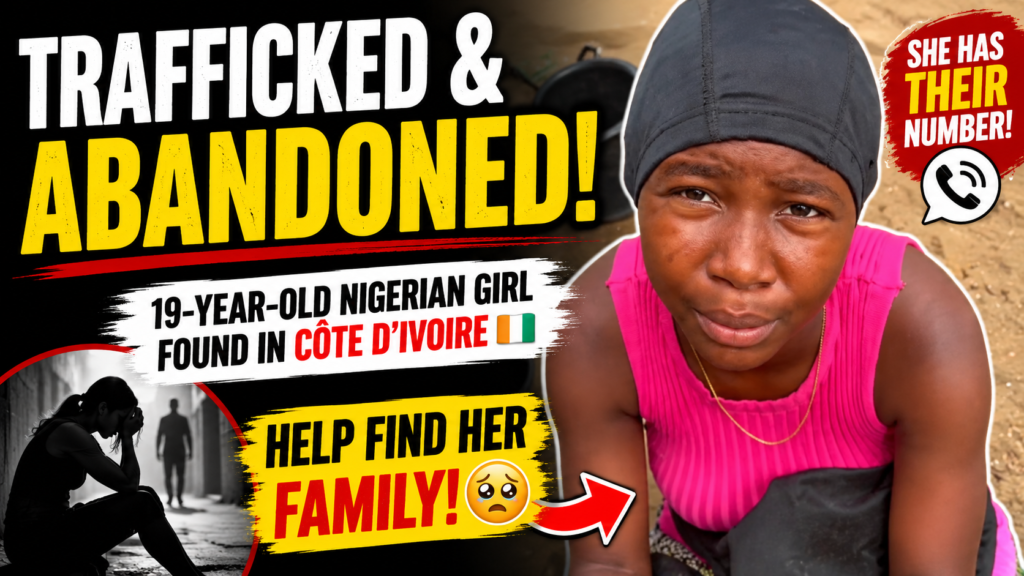
A 19-year-old Nigerian woman from Delta State, identified as Annabel, has spoken exclusively to GTV Daily about her ordeal after being trafficked to Côte d’Ivoire and later abandoned when she refused to be forced into prostitution.
In the interview, Annabel confirmed that both her mother and father are still alive, and said she can identify the woman who trafficked her — a detail that has raised hopes that investigators may be able to identify and prosecute those responsible. GTV Daily has shared what Annabel disclosed with the appropriate authorities and is not publishing identifying contact details of the suspect publicly, in order to protect the integrity of any investigation and avoid compromising her safety.
If you know Annabel or have credible information that could help reunite her with her family, please contact the National Agency for the Prohibition of Trafficking in Persons (NAPTIP) or reach out to GTV Daily directly. Every verified tip can make a difference — please share this story so it reaches the people who can help.
Watch Annabel’s full interview on the GTV Daily YouTube channel.
A Pattern That Keeps Repeating
Annabel’s story is, tragically, not an isolated one — and recent weeks have shown just how active this trafficking route into Côte d’Ivoire remains.
Just this month, Delta State Police confirmed the arrest of two suspects in the case of Ejiro, another 19-year-old from the state, who was trafficked to Ivory Coast under the promise of a job, refused to work as a prostitute, and was later found to have had her womb removed without consent before being abandoned in Lagos. Police said one suspect admitted to receiving ₦400,000 for delivering the teenager to traffickers.
In a separate case reported the same week, five young Nigerian women — aged between 17 and 38 — were rescued from a trafficking network in Côte d’Ivoire in a joint operation involving NAPTIP and the Global Anti-Human Trafficking Organisation (GAHTO). The women reported being subjected to repeated commercial sexual exploitation, with traffickers forcing them to service numerous clients each day while collecting the proceeds.
Earlier this year, a 17-year-old from Abia State escaped her traffickers in Abidjan, fled to Liberia, and was handed over to NAPTIP through the Nigerian Embassy in Monrovia.
These cases point to a well-established pattern: young Nigerian women, disproportionately from Delta and Edo States, are lured with false job offers — bar work, hairdressing, sales, domestic help — only to discover on arrival that they have been trafficked for commercial sexual exploitation. Traffickers frequently route victims overland through Benin, Togo, Ghana and Burkina Faso, or directly into Côte d’Ivoire, where investigations by organisations including Human Rights Watch have documented networks of brothels staffed by trafficked Nigerian women and girls.
The Human Cost
Beyond Côte d’Ivoire, similar trafficking routes have funnelled Nigerian women into Mali, Burkina Faso, Senegal, Ghana, Libya, and further afield into parts of Europe and the Middle East. Survivors consistently describe debt bondage — being told they must “repay” the cost of their transport through commercial sexual exploitation, often under threats of violence or actual physical abuse when they resist.
The dangers are severe: physical and sexual violence, exposure to HIV and other sexually transmitted infections, unwanted pregnancies, and long-term psychological trauma including anxiety, depression and post-traumatic stress. Survivors who make it home often face stigma that complicates reintegration with their families and communities, on top of the medical and emotional toll of what they endured.
Why Stronger Action Is Needed
Nigeria has a legal framework to fight trafficking — the Trafficking in Persons (Prohibition) Enforcement and Administration Act — and NAPTIP has secured convictions, coordinated rescues, and facilitated repatriations while working alongside foreign governments and organisations such as the International Organization for Migration (IOM). However, the frequency of new cases, including Annabel’s and Ejiro’s within weeks of each other, shows the networks are still finding victims faster than they are being dismantled.
What’s needed, according to anti-trafficking advocates, includes faster cross-border cooperation between Nigeria and destination countries, more consistent prosecution of traffickers and their local facilitators, better-resourced investigations, and closer monitoring of recruitment happening through informal and online channels. Addressing root causes — youth unemployment, limited access to education and skills training, and poverty — remains central to reducing how many young women are vulnerable to these offers in the first place.
What You Can Do
Awareness remains one of the most immediate tools available. A few warning signs worth sharing widely:
- Legitimate job offers rarely require secrecy or large upfront “processing fees” paid directly to an individual.
- Be wary of anyone asking you to surrender your passport or personal documents before travel.
- Verify any overseas job offer through an official agency or embassy — not through a personal contact or social media advertisement alone.
Schools, churches, community leaders and the media all have a role in spreading this awareness, and survivor stories — shared carefully and with consent — remain some of the most effective warnings available.
If you have information about Annabel’s case or a similar situation, contact NAPTIP through its official channels, or reach out to GTV Daily directly at gtvdailyblog@gmail.com.
Human trafficking thrives in silence. By reporting suspicious recruitment schemes, verifying overseas job offers, and supporting survivors, communities can help prevent more young Nigerians from becoming victims.