
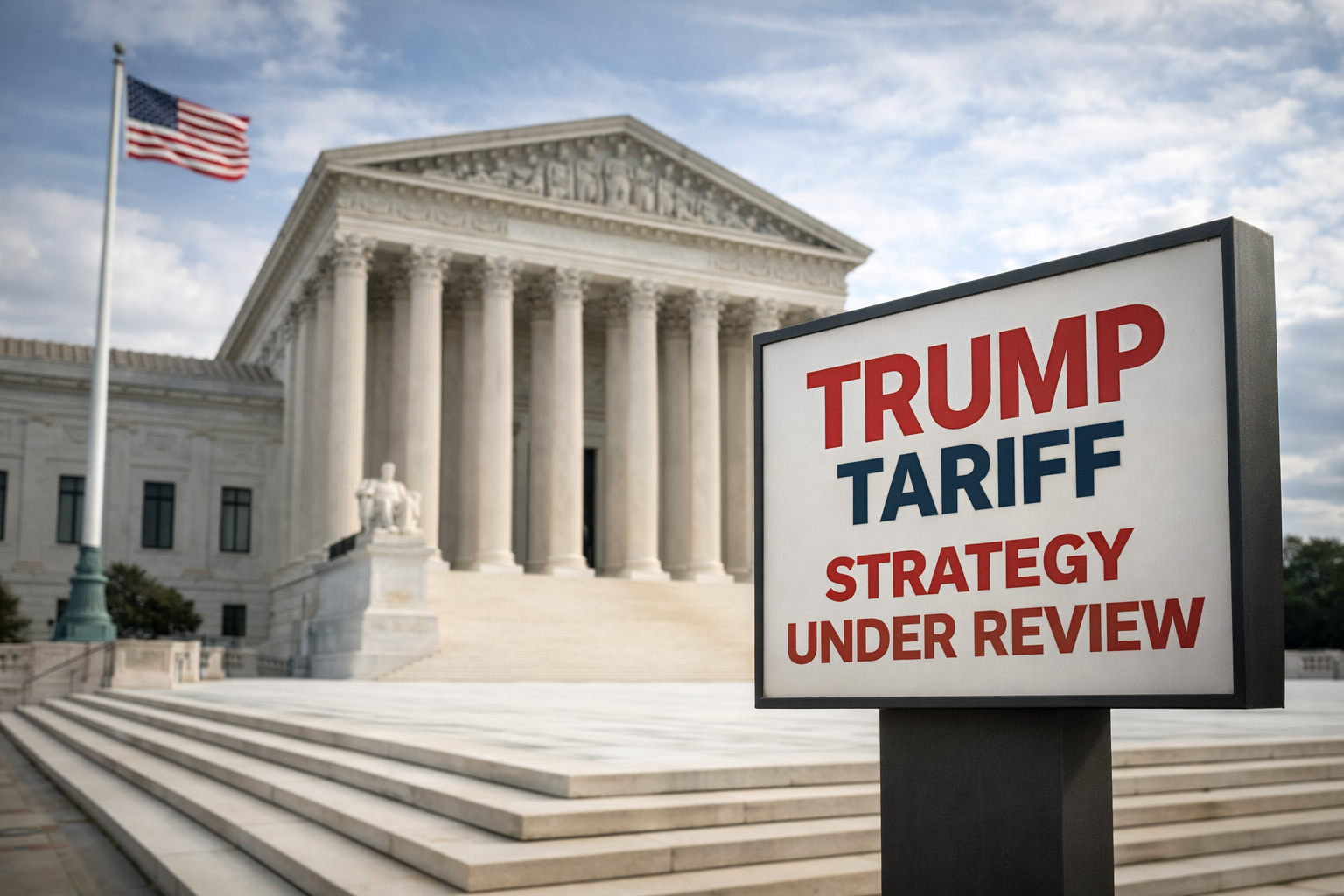
Global News Explained: How the 2026 Supreme Court Ruling Just Clipped the President’s Trade Powers
The U.S. Supreme Court just dropped a major decision that could reshape how America does business with the world. It’s already sending ripples through boardrooms, factories, and global markets.
On February 20, 2026, in a 6-3 ruling in the case of Learning Resources Inc. v. Trump, the Court significantly limited a president’s ability to unilaterally impose tariffs using emergency powers.
This isn’t just another legal battle. It’s a fundamental reset of the balance between the White House and Congress on international trade.
The Core Issue: Can the President Tax Without Congress?
For nearly 50 years, presidents from both parties relied heavily on the International Emergency Economic Powers Act (IEEPA) of 1977.
This law was meant to let the executive branch act fast during real national emergencies. But over time, it became a blank check for trade policy.
In 2025, the administration used IEEPA to impose broad tariffs on China, Mexico, Canada, and others. They claimed trade imbalances and border security qualified as emergencies.
The Supreme Court pushed back.
Chief Justice Roberts, writing for the majority, drew a clear line: regulating commerce in an emergency is allowed — but imposing tariffs, which are essentially taxes on imports, is not.
Under the Constitution, the power to tax belongs strictly to Congress.
What This Means in Real Dollars
This ruling hits hard financially.
Analysts estimate the U.S. government may need to refund up to $175 billion in tariffs collected throughout 2025. Many companies in tech, retail, and manufacturing are already preparing refund claims for duties paid on semiconductors, electronics, and consumer goods.
In response, the administration has shifted to Section 122 of the Trade Act of 1974. This allows a temporary 10% global surcharge — but it comes with a strict limit.
It expires after 150 days unless Congress votes to extend it. No more unlimited emergency tariffs.
Who Wins and Who Loses?
American Tech and Retail Giants Clear winners. Lower import costs should help stabilize prices for phones, laptops, clothing, and other everyday goods in the second half of 2026.
Mexico and Canada They gain breathing room. As top trading partners under USMCA, the threat of sudden 25% tariffs on cars, auto parts, and agricultural products has dropped sharply.
U.S. Domestic Manufacturers A mixed bag. They lose some protection from cheap imports but gain cheaper raw materials like steel and aluminum, which could lower their production costs.
The Major Questions Doctrine Strikes Again
What Happens Next?
We’re likely entering a more legislative era for U.S. trade policy. Expect intense debates in the House Ways and Means Committee as lawmakers try to create new rules that protect American interests without crossing the Supreme Court’s new boundaries.
For everyday consumers, this could mean more predictable prices at the store in the short term.
In the long run, it may lead to trade deals with broader political support — even if they take longer to negotiate.
The era of lightning-fast executive trade wars might finally be fading. From now on, Congress will have a much louder voice in America’s economic battles.
Featured image AI-generated. Learn more here