Global Markets on Edge as Oil Prices Surge Amid Rising Middle East Tensions
February 2026 — Global financial markets reacted cautiously this week as oil prices climbed following renewed geopolitical tensions in the Middle East. Investors are closely monitoring diplomatic developments involving the United States and Iran, amid growing concerns that further escalation could disrupt global energy supplies.
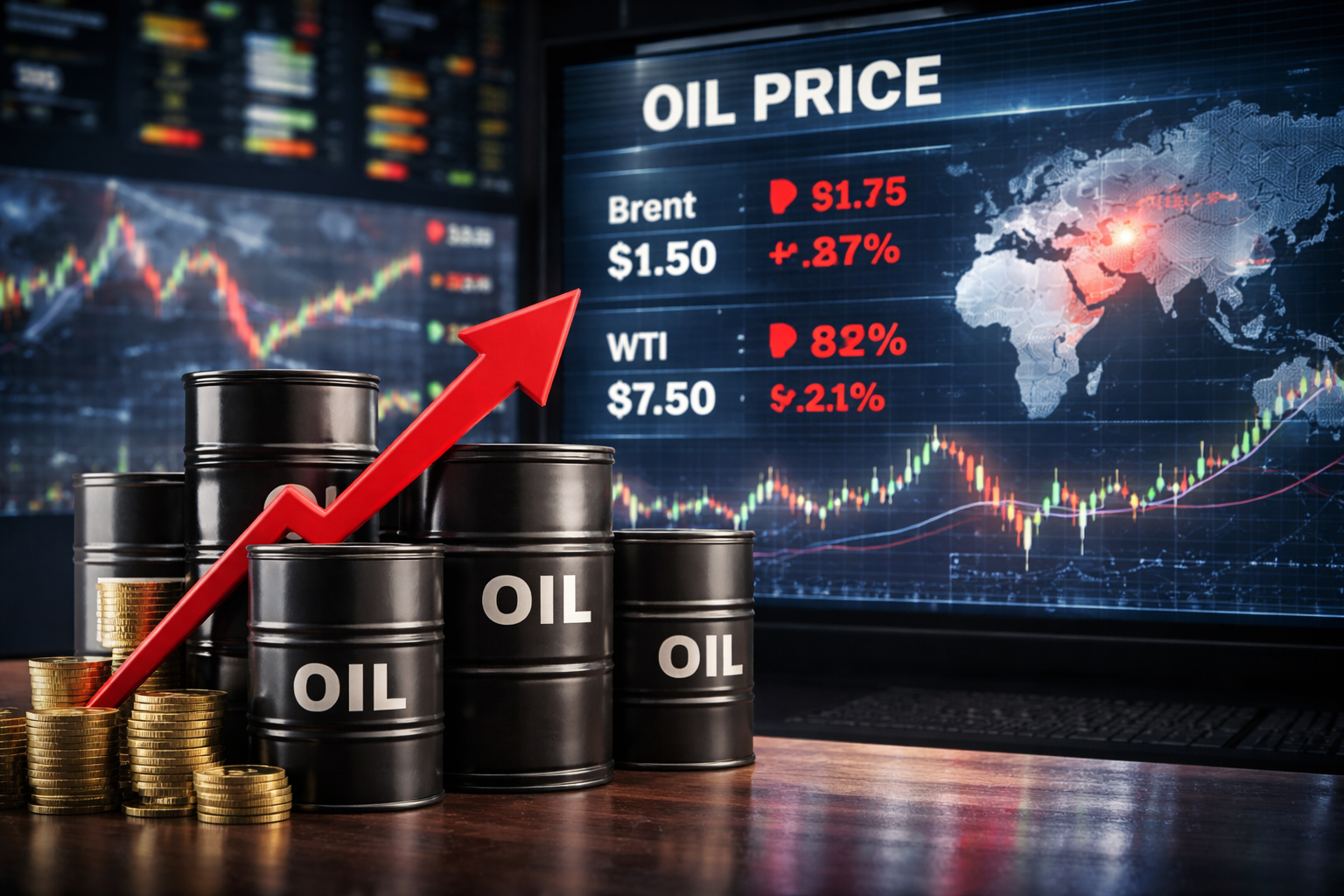
Brent crude and other benchmark oil prices recorded gains during early trading sessions, reflecting market sensitivity to potential instability in key oil transit routes. Analysts say even the perception of risk in the region is enough to trigger price volatility.
Strategic Concerns Over Energy Supply Routes
One focal point of market concern is the Strait of Hormuz, a narrow maritime passage through which a significant portion of the world’s crude oil shipments transit daily. Any disruption in this corridor — whether through military activity or heightened security measures — could tighten global supply chains and elevate energy costs.
Energy analysts note that global oil markets tend to react quickly to geopolitical signals, even before concrete disruptions occur. As a result, traders have adjusted positions in anticipation of possible supply constraints.
Diplomatic Efforts and Broader Geopolitical Context
Diplomatic discussions between international stakeholders remain ongoing. Officials from several Western governments have emphasized the importance of de-escalation and continued negotiations to prevent instability in the region.
At the same time, global uncertainty is compounded by unresolved tensions in Eastern Europe, where peace negotiations related to the Ukraine conflict remain fragile. Combined geopolitical pressures are contributing to broader market caution.
Potential Economic Impact on Consumers and Import-Dependent Nations
Higher oil prices often translate into increased transportation and production costs. For countries that rely heavily on fuel imports — including several emerging economies — sustained price increases could contribute to inflationary pressures.
In Nigeria, where fuel pricing and energy supply remain sensitive economic factors, any prolonged global oil volatility may influence domestic market dynamics, transportation costs, and consumer spending patterns.
Economists warn that while short-term price fluctuations are common, sustained geopolitical instability could affect global inflation trends and economic recovery projections.
Corporate and Government Responses
In response to the market developments, some governments are reportedly reviewing strategic petroleum reserves and contingency plans. Major corporations in logistics and manufacturing sectors are also monitoring developments to assess potential cost implications.
Financial markets remain reactive but measured, with investors awaiting clearer diplomatic signals before making long-term positioning decisions.
Market Outlook
While immediate disruptions have not been confirmed, uncertainty remains a dominant factor influencing investor sentiment. Analysts suggest that oil prices will likely remain sensitive to diplomatic updates, security developments, and policy announcements in the coming weeks.
For consumers and businesses worldwide, the situation underscores the interconnected nature of global energy markets and geopolitical stability.
Conclusion
The recent surge in oil prices highlights how geopolitical tensions can quickly ripple across financial markets. As diplomatic efforts continue, global investors, governments, and consumers are watching closely.
Market stability in the coming weeks will largely depend on the trajectory of negotiations and the avoidance of direct disruptions to critical energy routes.