
One of the most common questions from people who are new to resin art is simply this — what do I need to buy? Walking into a craft store or browsing online for resin art supplies for the first time can be overwhelming. There are dozens of products, brands and options and without guidance it is easy to spend money on things you do not need while missing essential items. This article cuts through the confusion with a comprehensive, practical guide to everything you need to get started with resin art.
The Essential Shopping List
Before going into detail about each category of supplies here is your complete essential shopping list for getting started with resin art. Everything on this list is genuinely necessary for producing quality resin art safely and effectively.
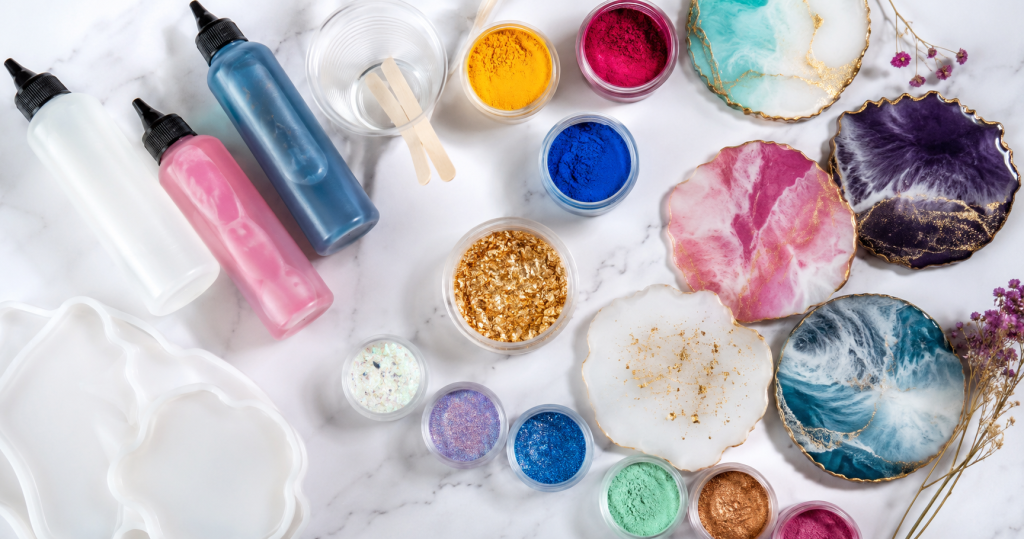
You will need epoxy resin and hardener, measuring cups or a digital kitchen scale, mixing sticks or silicone spatulas, silicone molds in your chosen shapes, resin pigments or alcohol inks for coloring, nitrile gloves, safety glasses, a heat gun or butane torch, a level work surface, plastic sheeting or silicone mat to protect your workspace, and isopropyl alcohol for cleaning tools and surfaces. With these essentials you have everything needed to complete your first resin art projects.
Epoxy Resin and Hardener
The resin itself is obviously the most important material purchase and it is worth spending time choosing the right product. For beginners an art-grade epoxy resin specifically formulated for craft and artistic applications is strongly recommended over industrial grade resins.
Art resins are typically crystal clear, UV resistant to prevent yellowing, low odor and formulated with beginners in mind. They come with clear mixing instructions and are generally more forgiving of minor errors in measurement and mixing technique.
When starting out choose a smaller quantity to allow you to practice and experiment before committing to a larger purchase. A one kilogram kit of resin and hardener is sufficient for multiple beginner projects and allows you to get a feel for the material before buying in bulk.
In Nigeria art grade epoxy resin is increasingly available from craft suppliers in Lagos, Abuja and other major cities. It is also available online through platforms like Jumia and Konga. Compare prices but prioritize quality over cost saving — cheap low-quality resin produces poor results that are frustrating for beginners and can put you off resin art before you have had a fair chance to experience it.
Measuring Equipment
Accurate measurement is absolutely critical in resin art. The chemical reaction that transforms liquid resin into solid material only works correctly when the resin and hardener are mixed in exactly the ratio specified by the manufacturer. Even small errors in measurement can result in resin that remains sticky, does not cure properly or develops other problems.
Two measurement options are available. Graduated measuring cups with clear volume markings allow you to measure resin and hardener by volume. This method is perfectly adequate for most applications. A digital kitchen scale that measures in grams allows you to measure by weight. Weight measurement is more precise than volume measurement particularly for small quantities and is the preferred method of experienced resin artists.
Whichever method you choose invest in dedicated measuring equipment used only for resin. Do not use your kitchen measuring cups and scales for resin as contamination is difficult to remove completely and you do not want resin residue in contact with your food preparation equipment.
Mixing Cups and Sticks
You will need cups for mixing your resin and hardener together and sticks or spatulas for stirring. Graduated plastic mixing cups are widely available and affordable. They are typically single-use as cured resin is very difficult to remove from hard plastic.
Silicone mixing cups are a more sustainable alternative as cured resin can be peeled out of silicone once fully hardened allowing the cups to be reused many times. While more expensive initially silicone cups quickly pay for themselves through reuse.
For mixing sticks wooden craft sticks are inexpensive and widely available. Silicone spatulas are a better option as they allow you to scrape the sides and bottom of the cup more effectively ensuring complete mixing. Reusable silicone spatulas can be cleaned easily with isopropyl alcohol.
Silicone Molds
Silicone molds are the most practical option for creating shaped resin objects. The flexible silicone material makes it easy to demold finished pieces without damage — simply flex the mold and the cured resin piece pops out cleanly.
For beginners a selection of basic mold shapes provides maximum versatility. Circular molds in various sizes are perfect for coasters. Square and rectangular molds are useful for trays and decorative tiles. Jewelry molds in pendant, earring and ring shapes allow you to create wearable resin art. Geometric shape molds in hexagon, diamond and other shapes create attractive decorative objects.
As your skills develop you will naturally accumulate a larger collection of molds. Start with the basics and add new shapes as your projects and interests expand.
Colorants and Pigments
The colorants you use are what bring your resin art to life. Several different types of colorants work well with epoxy resin each producing slightly different effects.
Resin pigment powders produce rich, opaque colors and are available in an extraordinary range of colors including vibrant standard colors and stunning metallic shades in gold, silver, copper and rose gold. Mica powders, a type of pigment powder, are particularly popular in resin art for their beautiful shimmer and the way they catch and reflect light.
Alcohol inks produce transparent, jewel-like colors that create stunning effects in resin. They flow and blend naturally in liquid resin creating organic, fluid patterns that are difficult to achieve with other colorants. Alcohol inks are particularly effective for creating ocean effects, abstract art and transparent color layers.
Resin dyes produce transparent colors similar to alcohol inks. They are specifically formulated for use in resin and are available in a wide range of colors.
Start your colorant collection with a small selection of basic colors — primary colors plus black and white — and metallic powders. You can mix these to create additional colors and gradually expand your palette as your skills develop.
Safety Equipment
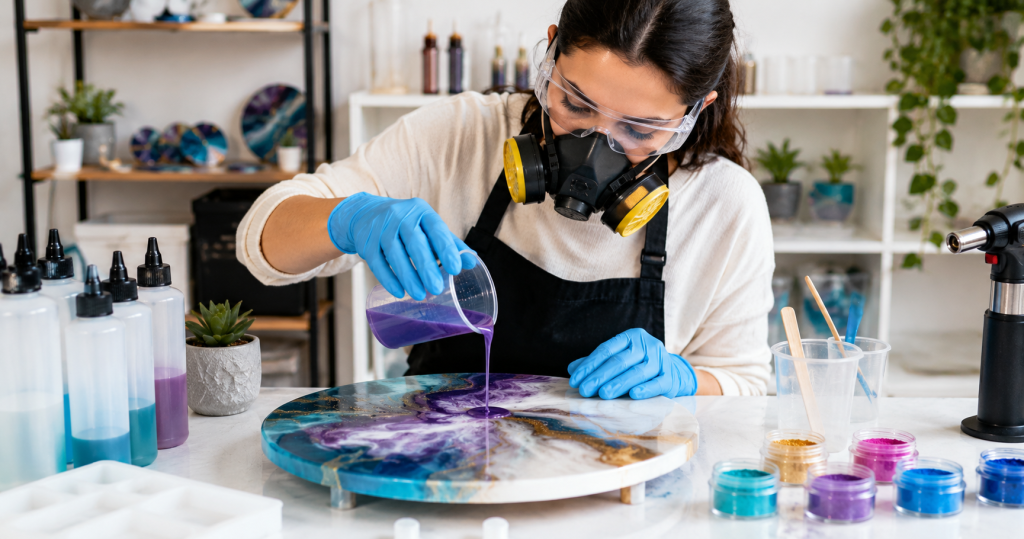
Safety equipment is not optional in resin art. It is essential and should be purchased before you handle resin for the first time.
Nitrile gloves protect your hands from contact with uncured resin which can cause skin sensitization and allergic reactions with repeated exposure. Always wear gloves when handling uncured resin. Have a generous supply of gloves available as you will go through them quickly.
Safety glasses protect your eyes from splashes of liquid resin. Resin in the eyes is a serious matter requiring immediate medical attention. The few seconds it takes to put on safety glasses before working with resin is time very well spent.
A respirator mask is recommended particularly for extended working sessions in enclosed spaces. The fumes from uncured resin are not acutely toxic in the way that some chemicals are but prolonged exposure can cause respiratory irritation and sensitization. A good quality respirator mask rated for organic vapors provides adequate protection.
Heat Gun or Torch
A heat gun or butane torch is used to remove bubbles from the surface of poured resin. When resin is mixed and poured numerous tiny air bubbles are introduced into the mixture. These bubbles would remain in the finished piece as small opaque spots unless they are removed.
Passing a heat gun or torch quickly over the surface of poured resin causes the bubbles to pop and release, leaving a clear smooth surface. This technique requires practice to master — too much heat or too slow a pass can cause problems including scorching the resin surface or creating new bubbles.
A basic hot air heat gun available from hardware stores is perfectly adequate for most resin art applications. A butane kitchen torch is another popular option that many artists prefer for its precision and portability.
Workspace Protection
Resin is extremely difficult to remove from surfaces once cured. Protecting your work surface before starting is therefore essential. A silicone mat provides the most practical work surface protection as cured resin peels cleanly off silicone. Plastic sheeting or a disposable plastic drop cloth is a more affordable alternative.
Isopropyl alcohol at 90 percent concentration or higher is essential for cleaning resin from tools, molds and surfaces before it cures. Keep a generous supply on hand and clean all tools immediately after use before the resin has a chance to begin curing.
Where to Buy Resin Art Supplies in Nigeria
Resin art supplies are increasingly available in Nigeria. Dedicated craft and art supply stores in Lagos, Abuja and Port Harcourt stock basic resin art materials. Online platforms including Jumia, Konga and Instagram-based craft suppliers offer a wider range of products with delivery options.
For the best prices and widest selection consider joining Nigerian resin art communities on Facebook and WhatsApp where members share information about the best local suppliers and occasionally organize group purchasing to reduce costs.