Safety is the foundation of successful resin art. Before you mix your first batch of resin before you open your first bottle of pigment before you even set up your workspace you need to understand the safety requirements of working with epoxy resin. This is not meant to frighten you away from resin art — millions of people practice it safely every day. But it does require respect, proper precautions and a commitment to following safety guidelines consistently. This article covers everything you need to know to practice resin art safely.
Understanding the Risks
Epoxy resin in its uncured liquid state contains chemical compounds that can cause skin irritation, skin sensitization and respiratory irritation with repeated or prolonged exposure. The primary concern with resin art safety is not acute poisoning but sensitization — the development of an allergic reaction to resin components that can worsen with continued exposure.
Skin sensitization means that your immune system develops a reaction to resin components. Once sensitized even small amounts of contact with resin can trigger allergic reactions including skin rashes, itching and in severe cases more serious reactions. The good news is that sensitization is largely preventable through consistent use of appropriate protective equipment and good working practices.
The fumes released by uncured epoxy resin while not acutely toxic in the way that some chemicals are can cause respiratory irritation with prolonged exposure in poorly ventilated spaces. Good ventilation significantly reduces this risk.
It is important to understand that these risks apply specifically to uncured resin. Once epoxy resin has fully cured it is chemically inert and safe to handle without special precautions. The safety measures discussed in this article are for working with liquid uncured resin only.
Personal Protective Equipment
Personal protective equipment is your first and most important line of defense against the risks associated with resin art. The following equipment should be considered mandatory for all resin art sessions.
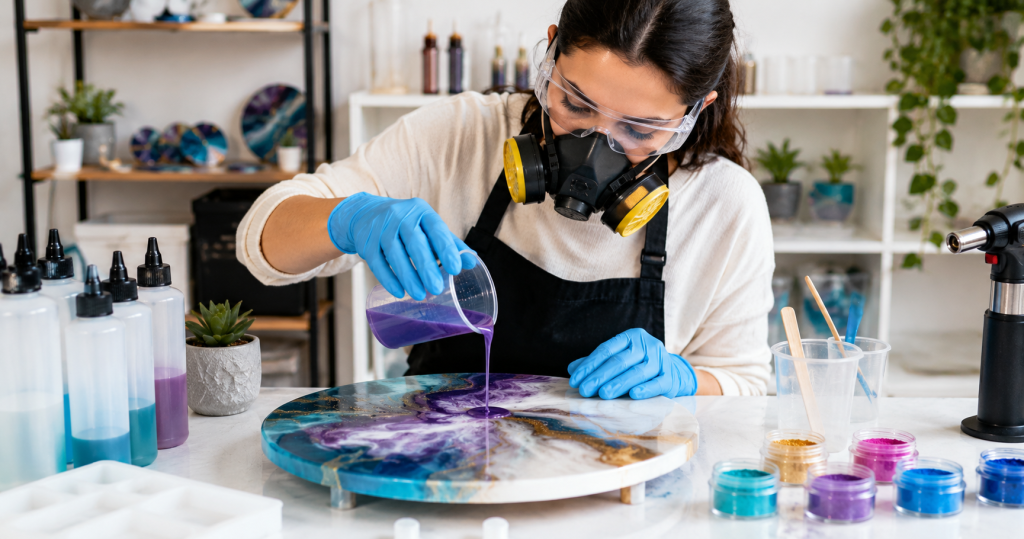
Nitrile gloves are essential and should be worn whenever you are handling uncured resin including during mixing, pouring, demolding and cleanup. Nitrile is the preferred glove material for resin art as it provides better chemical resistance than latex or vinyl. Keep a generous supply of gloves on hand and change them immediately if they become torn or contaminated with resin. Never touch uncured resin with bare hands.
Safety glasses or goggles protect your eyes from splashes of liquid resin. This protection is particularly important during mixing when splashing is most likely. Standard glasses do not provide adequate side protection — proper safety glasses or goggles that wrap around the eyes are recommended.
A respirator mask provides the most comprehensive respiratory protection for resin art work. A half-face respirator with organic vapor cartridges filters out the chemical vapors released by uncured resin. While a basic dust mask provides some protection it is not designed for chemical vapors and provides inadequate protection for resin work. If you are working with resin regularly a proper respirator is a worthwhile investment in your long-term health.
An apron or old clothing that you do not mind getting resin on protects your clothing from resin splashes and drips. Once cured resin is virtually impossible to remove from fabric so wear clothes you do not value for resin art sessions.
Ventilation Requirements
Adequate ventilation is one of the most important safety requirements for resin art. Working with resin in a poorly ventilated enclosed space allows chemical vapors to accumulate to concentrations that can cause respiratory irritation and contribute to sensitization.
The ideal workspace for resin art is a well-ventilated area where fresh air can circulate freely. Outdoor working or working in a space with open windows and doors on opposite sides of the room creating a cross-breeze is ideal. A fan that draws air out of the workspace and exhausts it outdoors provides active ventilation in spaces where natural ventilation is inadequate.
Avoid working with resin in confined spaces like small bathrooms or closets where ventilation is minimal. Never work with resin in a bedroom or other living space where people sleep as fumes can accumulate overnight even after you have finished working.
Workspace Safety
Your workspace setup has important implications for both safety and the quality of your work. A safe and well-organized workspace reduces the risk of accidents and makes resin art much more enjoyable.
Work on a stable, level surface. Resin is self-leveling meaning it flows to find its own level and will run off a tilted surface. A workbench or table at a comfortable working height with a perfectly level surface is ideal. Use a spirit level to check that your work surface is level before pouring.
Protect your work surface thoroughly before starting. Resin is extremely difficult to remove once cured and will permanently damage unprotected surfaces. Silicone mats, plastic sheeting and dedicated silicone work surfaces all provide good protection.
Keep your workspace organized and free of clutter. You will need quick access to tools during the limited working window before your resin begins to cure and a cluttered workspace can result in accidents and mistakes. Prepare everything you need before mixing your resin.
Keep children and pets out of your resin workspace. Uncured resin is not safe for children or animals to touch and the last thing you need during a critical pour is a small child or curious pet getting into your workspace.
Safe Handling Practices
Beyond wearing appropriate protective equipment certain handling practices significantly reduce safety risks when working with resin.
Never eat, drink or smoke while working with resin. Chemical contamination of food and beverages is a real risk and you should wash your hands thoroughly after any resin session before touching food or your face.
Handle resin containers carefully to avoid spills. When opening resin bottles do so slowly and carefully. When pouring resin into measuring cups do so in a controlled and deliberate manner. Have paper towels or rags available for immediate cleanup of any spills.
Clean up immediately after your resin session before any residual resin has a chance to cure on tools and surfaces. Isopropyl alcohol at 90 percent concentration or higher is the most effective cleaner for removing uncured resin from tools and surfaces. Dispose of resin-contaminated materials including gloves, paper towels and mixing cups safely — do not put them in regular waste bins until any resin has fully cured.
First Aid for Resin Incidents
Despite all precautions accidents can happen. Knowing the correct first aid response to resin exposure helps minimize the consequences of any incident.
Skin contact: Remove contaminated gloves immediately and wash the affected skin thoroughly with soap and water for at least 15 minutes. Do not use solvents like acetone to remove resin from skin as this increases skin absorption of resin components. If skin irritation persists consult a doctor.
Eye contact: Immediately flush the affected eye with clean water for at least 15 minutes holding the eye open to ensure thorough rinsing. Seek medical attention promptly.
Inhalation: If you experience dizziness, headache or respiratory irritation after resin exposure move immediately to fresh air. If symptoms persist seek medical attention.
Building Safe Habits
The most important safety principle in resin art is consistency. Safety precautions only protect you if you apply them every single time you work with resin without exception. It can be tempting to skip putting on your gloves for a quick adjustment or to work without proper ventilation just this once. Resist these temptations. The risks from resin exposure are cumulative and sensitization can develop from apparently minor repeated exposures.
Building safe habits from your very first resin session is much easier than trying to change unsafe practices later. Make safety preparation — gathering your protective equipment, setting up ventilation, protecting your workspace — an automatic part of your resin art routine from day one.