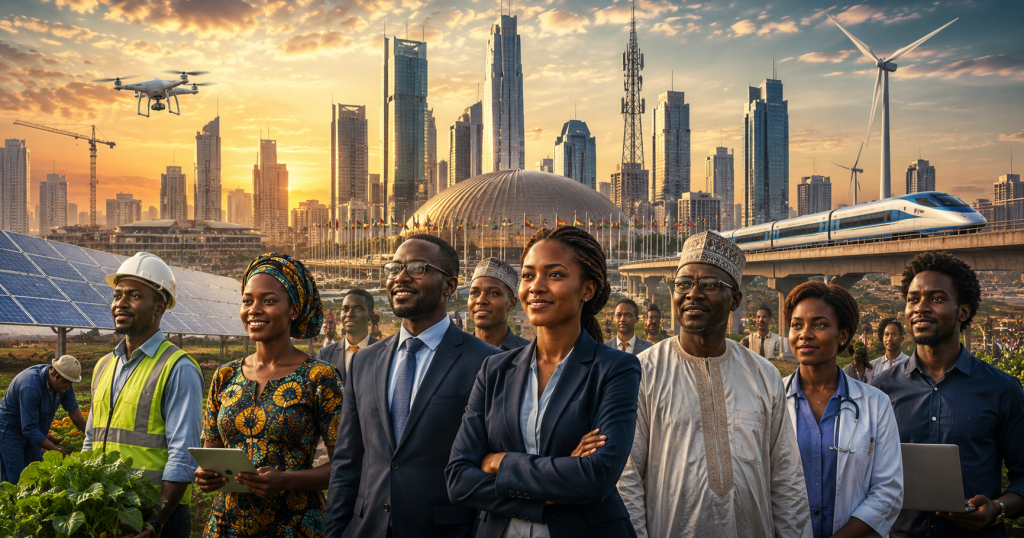
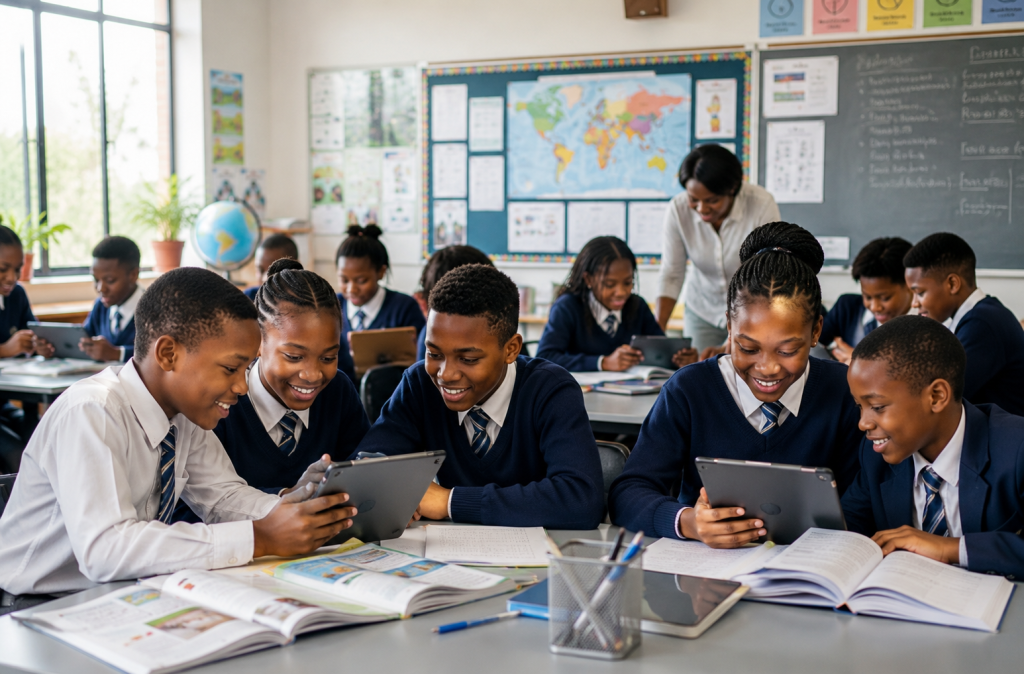
Education is the foundation upon which Africa’s future will be built. The continent’s ability to educate its rapidly growing young population will determine whether Africa fulfills its enormous potential or squanders it. The good news is that across Africa, remarkable progress is being made in expanding access to quality education. The even better news is that technology is opening up possibilities for educational transformation that would have seemed impossible just a decade ago.
The Current State of African Education
Africa has made significant progress in education over the past three decades. Primary school enrollment rates have increased dramatically across the continent with more children in school today than at any point in history. Adult literacy rates have improved substantially and the number of universities and tertiary institutions has grown rapidly.
Yet serious challenges remain. Too many African children still leave school without acquiring basic literacy and numeracy skills. The quality of education in many schools remains poor due to inadequate teacher training, overcrowded classrooms, lack of learning materials and insufficient funding. Girls in many parts of Africa still face significant barriers to education including early marriage, cultural attitudes and safety concerns.
The gap between urban and rural education quality remains wide. Children in cities generally have access to better schools, more qualified teachers and more learning resources than their counterparts in rural areas. Bridging this gap is one of the most important challenges facing African education systems.
Technology Transforming African Education
Technology is emerging as a powerful force for educational transformation in Africa. Mobile phones, tablets and internet connectivity are opening up access to quality educational content for students who previously had none. A child in a rural village in Tanzania or a slum in Nairobi can now access the same high quality educational videos, textbooks and learning tools as a child in the best school in London or New York.
Platforms like Khan Academy, which provides free world class education to anyone with an internet connection, have been transformative for African students. Local African edtech companies are also developing solutions tailored specifically to African curricula, languages and contexts.
In Kenya, the government has distributed tablets to primary school students giving millions of children access to digital learning tools for the first time. While implementation has faced challenges, the initiative demonstrates the potential of technology to rapidly expand access to quality education at scale.Radio and television have also played important roles in African education particularly in reaching students in areas with limited internet connectivity. Educational broadcasting programs have proven effective in supplementing classroom instruction and reaching students who cannot attend school regularly.
Higher Education: Africa’s Universities Rising
African universities are rising in global rankings and reputation. Institutions like the University of Cape Town, the University of Nairobi, Cairo University and the American University of Beirut are producing world class research and graduates who are competing successfully in global job markets.
The establishment of pan-African institutions like the African Leadership University and the African Institute for Mathematical Sciences reflects a growing ambition to create distinctly African centers of excellence that combine global standards with African perspectives and priorities.
The growth of online education is also democratizing access to higher education in Africa. Massive open online courses from the world’s leading universities are available to anyone with an internet connection. African students are increasingly taking advantage of these opportunities to access world class education without the cost and disruption of studying abroad.
Vocational Training: Meeting Africa’s Skills Needs
Africa’s economic development requires not just university graduates but skilled tradespeople, technicians and entrepreneurs. Vocational and technical education has historically been underfunded and undervalued across much of the continent. That is changing as governments and employers recognize the critical importance of practical skills for economic development.
New vocational training centers are being established across Africa focusing on skills that are in high demand including construction, manufacturing, information technology, healthcare and agriculture. Private sector companies are increasingly partnering with training institutions to ensure that graduates have the skills employers actually need.
Entrepreneurship education is also growing in importance as African economies seek to develop the next generation of business creators and innovators. Programs that teach young Africans not just how to find jobs but how to create them are making a real difference in communities across the continent.
The Role of Teachers
No educational reform can succeed without excellent teachers. Across Africa there is a critical shortage of qualified teachers particularly in rural areas and in subjects like mathematics, science and technology. Improving teacher training, increasing teacher pay and creating better working conditions are essential priorities for African education systems.
Technology can also help address the teacher shortage by enabling one excellent teacher to reach many more students through video lessons and digital learning platforms. Peer learning approaches where older students help younger ones have also proven effective in contexts where teacher numbers are insufficient.
Investing in Africa’s Educational Future
Ultimately improving education in Africa requires sustained investment from governments, the private sector, international organizations and communities themselves. Education spending as a percentage of GDP in many African countries remains below international benchmarks. Increasing this investment is not just a moral imperative but an economic one.
The returns on investment in education are among the highest of any public expenditure. Every additional year of quality schooling increases an individual’s lifetime earnings and contributes to national economic growth. Investing in girls education in particular has been shown to have transformative effects on families, communities and entire economies.
Africa’s educational future is bright. The combination of a young and growing population, rapidly expanding technology access, rising investment and genuine commitment to educational improvement creates real grounds for optimism. The children in Africa’s classrooms today will be the entrepreneurs, scientists, artists and leaders who shape the continent’s story tomorrow.