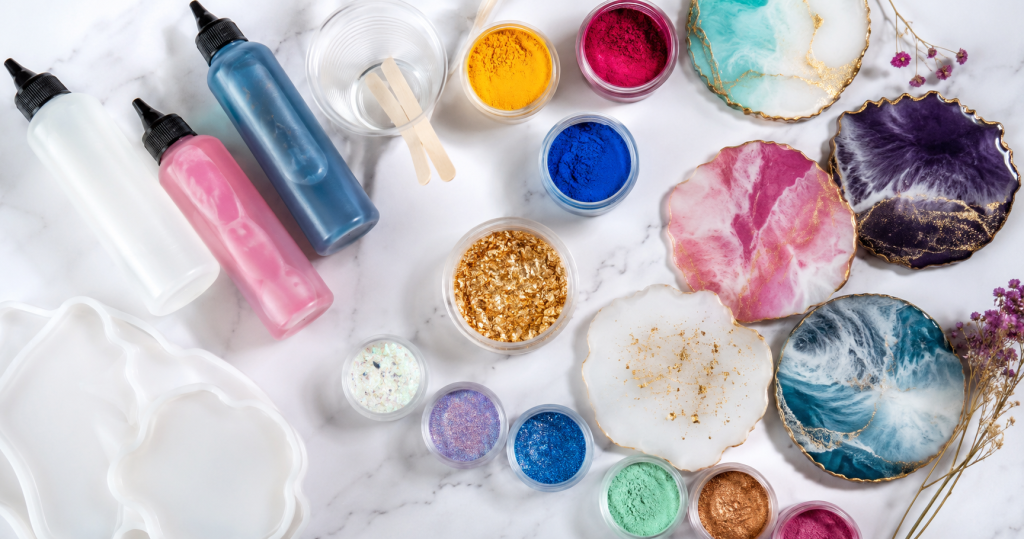
Color is the language of resin art. The extraordinary visual impact of resin artworks comes primarily from the way colors flow, blend and interact in the liquid resin before it cures. Mastering color work in resin art opens up a world of creative possibility — from the delicate translucency of alcohol ink ocean effects to the bold opacity of heavily pigmented abstract pours. This article covers everything you need to know about working with color in resin art including the different types of colorants available, how to use them effectively and how to create some of the most popular resin art effects.
Types of Colorants for Resin Art
Several different types of colorants can be used in resin art each with its own properties, characteristics and best uses. Understanding the differences between them will help you choose the right colorant for each application.
Resin pigment powders are finely ground color pigments that disperse in resin to produce rich, intense colors. They are available in an enormous range of colors from basic primary colors through to subtle naturalistic tones. Pigment powders produce opaque to semi-opaque effects depending on the quantity used. They are excellent for creating bold, saturated colors and for mixing custom colors.
Mica powders are a type of pigment powder that contains mica platelets which give the finished resin a distinctive shimmer and sparkle. Mica powders are among the most popular colorants in resin art for their beautiful light-catching properties. They are available in standard colors as well as stunning metallic shades including gold, silver, copper, rose gold and bronze. Metallic mica powders are particularly popular for creating luxurious, high-value looking resin pieces.
Alcohol inks are liquid dyes in an alcohol base that produce transparent, jewel-like colors in resin. Unlike pigment powders which produce opaque effects alcohol inks allow light to pass through the resin creating a depth and luminosity that is particularly beautiful. Alcohol inks flow naturally in liquid resin, spreading and blending in organic unpredictable patterns that are characteristic of much resin art. They are the colorant of choice for ocean effects, abstract pours and any application where flowing, spontaneous color movement is desired.
Resin dyes are liquid colorants specifically formulated for use in epoxy resin. They produce transparent colors similar to alcohol inks and are available in a wide range of hues. Resin dyes blend easily and consistently and are a reliable choice for beginners who want predictable transparent color results.
Acrylic paint can be used to color resin though it should be used sparingly as excessive amounts of paint can interfere with the curing process. A small amount of acrylic paint produces good opaque colors but for best results dedicated resin colorants are preferable.
Using Metallic EffectsMetallic effects are among the most popular and commercially successful in resin art. The combination of resin’s natural gloss with the shimmer of metallic pigments creates pieces of extraordinary luxury and visual impact.
Gold metallic effects are particularly popular in Nigerian and African resin art, resonating with cultural associations of gold with wealth, celebration and prestige. A resin piece with a deep navy or black background enhanced with flowing gold metallic pigment creates a striking, luxurious effect that is always in demand.
To create metallic effects add metallic mica powder or metallic resin pigment to a portion of your mixed resin. The amount added determines the intensity of the metallic effect — start with a small amount and add more until you achieve your desired level of shimmer. Pour the metallic colored resin alongside or over other colors and use a heat gun, stir stick or other tool to blend and manipulate it into your desired pattern.
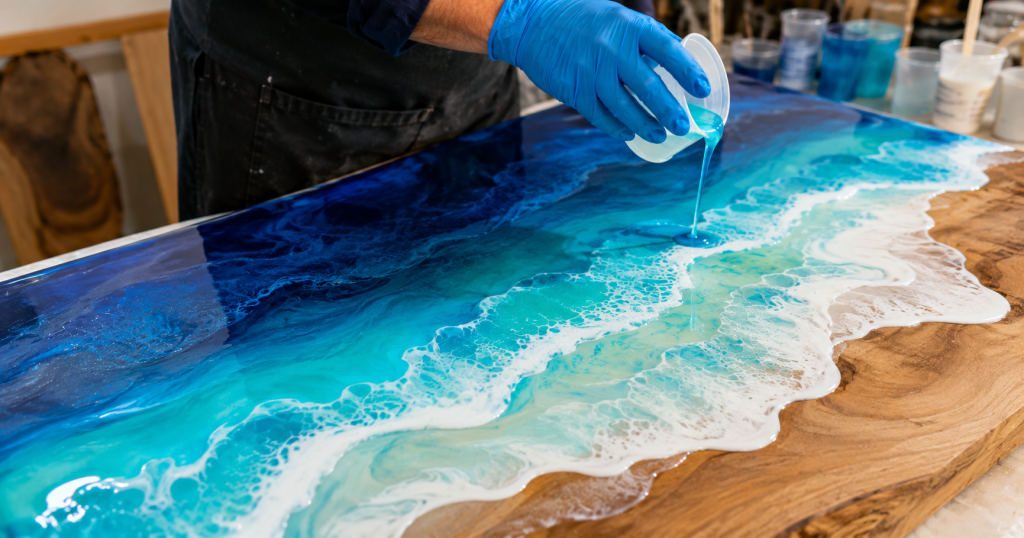
Creating the Ocean EffectThe ocean effect is one of the most popular and recognizable resin art techniques, creating the illusion of waves, foam and tropical water in resin. It is also one of the most satisfying techniques for beginners as it produces beautiful results with relatively simple execution.
To create an ocean effect you will need at least three colors — a deep blue or turquoise for the deep water, a medium turquoise or aqua for the mid-water and white for the foam and waves. Begin by pouring your deep water color across the lower portion of your canvas or mold. Add your mid-water color above it allowing the colors to blend slightly at the boundary. Apply your white color in a wavy line at the boundary between the mid-water and any upper section using a small amount of isopropyl alcohol sprayed over the white to create the characteristic lacy, foamy texture of ocean waves.
Use a heat gun passed quickly over the surface to encourage movement and blending of the colors. The combination of the heat and the isopropyl alcohol creates the organic, flowing movement characteristic of ocean resin art. Practice and experimentation are required to develop your own ocean effect technique as the results vary with different resins, colorants and application methods.
Creating the Marble Effect
Marble effects in resin recreate the elegant veining and flowing patterns of natural marble, creating pieces with a sophisticated, luxurious appearance. Marble effects are popular for coasters, trays, table tops and wall art.
Classic marble effects use white as the base color with grey and gold veining. Pour white resin as your base. Add thin streams of grey resin in diagonal lines across the surface. Add thinner streams of metallic gold resin following a similar diagonal direction. Use a skewer, stir stick or your gloved finger to drag through the colors creating the flowing vein-like patterns characteristic of marble.
The key to convincing marble effects is restraint. Natural marble has elegant, relatively simple veining rather than chaotic color mixing. Avoid over-manipulating your marble pour — a few deliberate, flowing movements create more convincing results than excessive blending.
Creating the Geode Effect
Geode-style resin art recreates the spectacular crystalline cavities found in certain rocks, creating pieces of extraordinary visual richness. Geode effects are among the most technically impressive and commercially valuable resin art styles.
Geode art typically uses bold colors — deep purples, blues and greens — with metallic accents and white crystal effects created with resin mixed with crystal sand or white mica powder. Creating convincing geode effects requires practice and a good eye for the organic, irregular patterns of natural geodes. Study reference images of actual geodes and crystal formations to develop your eye for the shapes, colors and patterns you want to recreate.
Color Mixing and Custom ColorsOne of the most valuable skills in resin art is the ability to mix custom colors from basic pigments. Like a painter mixing colors on a palette, a resin artist who can mix custom colors has vastly more creative possibilities than one who uses only ready-made colors.
The basic principles of color mixing apply in resin art as in any other medium. Mix primary colors to create secondary colors. Add white to lighten a color and create tints. Add black to darken a color and create shades. Mix complementary colors to neutralize and grey them.
Keep a color mixing journal noting the colors and quantities you mix to create particular results. This allows you to recreate successful custom colors consistently and to develop your own signature color palette over time.