Mixing epoxy resin correctly is the single most important technical skill in resin art. Everything else you do — your color choices, your design techniques, your finishing methods — depends on having properly mixed resin as its foundation. Poorly mixed resin that has the wrong ratio of components or has been inadequately stirred will not cure correctly regardless of how beautiful your design is. This article covers everything you need to know to mix resin perfectly every single time.
Understanding Why Mixing Matters
Epoxy resin cures through a chemical reaction between the resin component and the hardener component. This reaction only proceeds correctly when the two components are present in exactly the ratio specified by the manufacturer and when they are thoroughly mixed together.
If you use too much resin relative to hardener the excess resin component has no hardener to react with and remains as uncured sticky resin in your finished piece. If you use too much hardener the excess hardener has nothing to react with and similarly causes problems. Even a seemingly small error in ratio can result in a piece that remains permanently tacky or develops soft spots that never fully harden.
Incomplete mixing creates a different problem. If resin and hardener are not thoroughly combined pockets of unmixed material remain in the mixture. When poured these pockets of unmixed resin or hardener create areas in the finished piece that do not cure correctly producing sticky spots, cloudiness or soft areas in what should be a hard, clear surface.
Understanding why accurate measurement and thorough mixing are so important makes it much easier to maintain the discipline required to do them correctly every time even when you are excited to start pouring.
Reading the Instructions
Before mixing any epoxy resin system for the first time read the manufacturer’s instructions completely and carefully. Different resin products have different mixing ratios, working times and curing requirements and assuming that all resins work the same way is a common and costly mistake.
Pay particular attention to the mixing ratio. Resin products use either volume ratios typically expressed as parts by volume such as 1:1 or 2:1 or weight ratios expressed as parts by weight. Some products specify their ratio by volume and weight both. Make sure you understand which measurement system applies to your specific product before measuring anything.
Note the pot life or working time — the amount of time you have after mixing before the resin begins to thicken and become too difficult to pour and manipulate. This time varies considerably between products from as little as 20 minutes to over an hour. Knowing your working time allows you to plan your pour accordingly.Note the cure time — the time required for the resin to fully harden. This is typically 24 to 72 hours for initial cure and one to two weeks for full cure. Understanding the cure timeline helps you plan your project schedule and avoid handling finished pieces before they are ready.
Measuring Your Resin
Accurate measurement begins before you open any bottles. Prepare your measuring equipment — either graduated cups or a digital scale — and have everything you need for your pour ready before you start measuring. Once you begin mixing you will have limited time to work and you do not want to be searching for tools while your resin is on the clock.
For volume measurement use graduated measuring cups with clearly marked volume lines. Measure your resin component first pouring carefully to the correct line. Pour the measured resin into your mixing cup. Then measure your hardener component pouring carefully to the correct line. Add the measured hardener to the mixing cup.
For weight measurement place your empty mixing cup on the digital scale and zero the scale. Add your resin component until the scale reads the correct weight then zero the scale again. Add your hardener component until the scale reads the correct weight.
Always measure the larger component first and add the smaller component to it rather than vice versa. This approach gives you more precise control over the measurement.
The Mixing Process
With your resin and hardener measured into your mixing cup you are ready to begin mixing. The quality of your mixing directly determines the quality of your finished piece so take this step seriously.
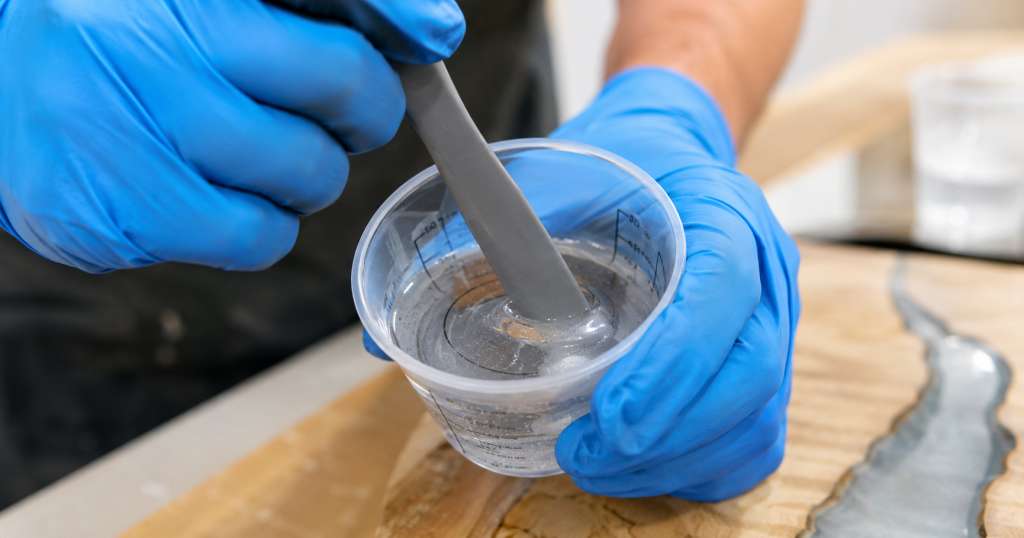
Begin mixing slowly with your mixing stick or silicone spatula. Slow initial mixing reduces the introduction of air bubbles into the mixture. Stir in a figure-eight or circular pattern making sure to reach all areas of the cup including the sides and the bottom where unmixed material can accumulate.
Mix thoroughly for the full time recommended by the manufacturer — typically two to three minutes for most products. This feels like a long time when you are eager to start pouring but it is essential. Count the time or use a timer to ensure you mix for the full recommended duration.
After mixing in your primary cup transfer the mixture to a second clean mixing cup and mix again briefly. This transfer technique is used by experienced resin artists to ensure complete mixing. Any unmixed material clinging to the sides of the first cup is left behind and fresh mixing ensures complete incorporation of all components.
Scrape the sides and bottom of your mixing cup regularly as you stir. Unmixed resin tends to accumulate at the sides and bottom of the cup and will remain uncured if not incorporated. Thorough scraping and stirring ensures that every drop of your mixture is properly combined.
Adding Colors
Colors should be added to your fully mixed resin after the resin and hardener have been completely combined. Never add color to the resin or hardener component before mixing as this can interfere with the measurement and mixing process.
Add your chosen pigments or colorants to the mixed resin and stir them in thoroughly. Add color incrementally starting with a small amount and adding more until you achieve your desired color intensity. It is much easier to add more color than to deal with an overly intense color.
When creating multiple colors for a pour divide your mixed resin into separate cups before adding different colors to each portion. Plan your color quantities carefully before dividing as you will not be able to add more mixed resin once you have started coloring.
Understanding Working Time
From the moment resin and hardener are mixed the curing reaction begins and the clock starts running on your working time. Understanding and working within your resin’s working time is essential for successful pours.
During the first half of the working time the resin remains fluid and easy to pour and manipulate. This is your primary working window and the time during which you should complete all pouring and design work.
During the second half of the working time the resin begins to thicken noticeably. It becomes increasingly difficult to pour and manipulate and any work done in this phase may show drag marks and other imperfections in the finished surface. Avoid working with resin that has already begun to thicken significantly.
After the working time has elapsed completely the resin becomes too thick to pour or manipulate without causing serious surface defects. At this point the best course of action is to allow what you have poured to cure completely rather than trying to continue working with thickened resin.
Common Mixing Mistakes and How to Avoid Them
Rushing the measurement is perhaps the most common mixing mistake. The few seconds saved by hasty measurement are not worth the frustration of a failed piece that results from an incorrect ratio. Take your time and measure carefully every single time.
Incomplete mixing is the second most common mistake. It is almost impossible to over-mix resin but very easy to under-mix it. When in doubt mix for longer and use the two-cup transfer technique.
Mixing too vigorously introduces excessive air bubbles into the mixture. These bubbles must then be removed from the surface of the poured resin using a heat gun or torch. Mix with a firm but controlled motion rather than whipping the mixture aggressively.
Using contaminated equipment introduces impurities into your resin that can cause cloudiness, inhibit curing and create other problems. Always use clean, dry equipment for resin mixing and clean all tools thoroughly after each use.