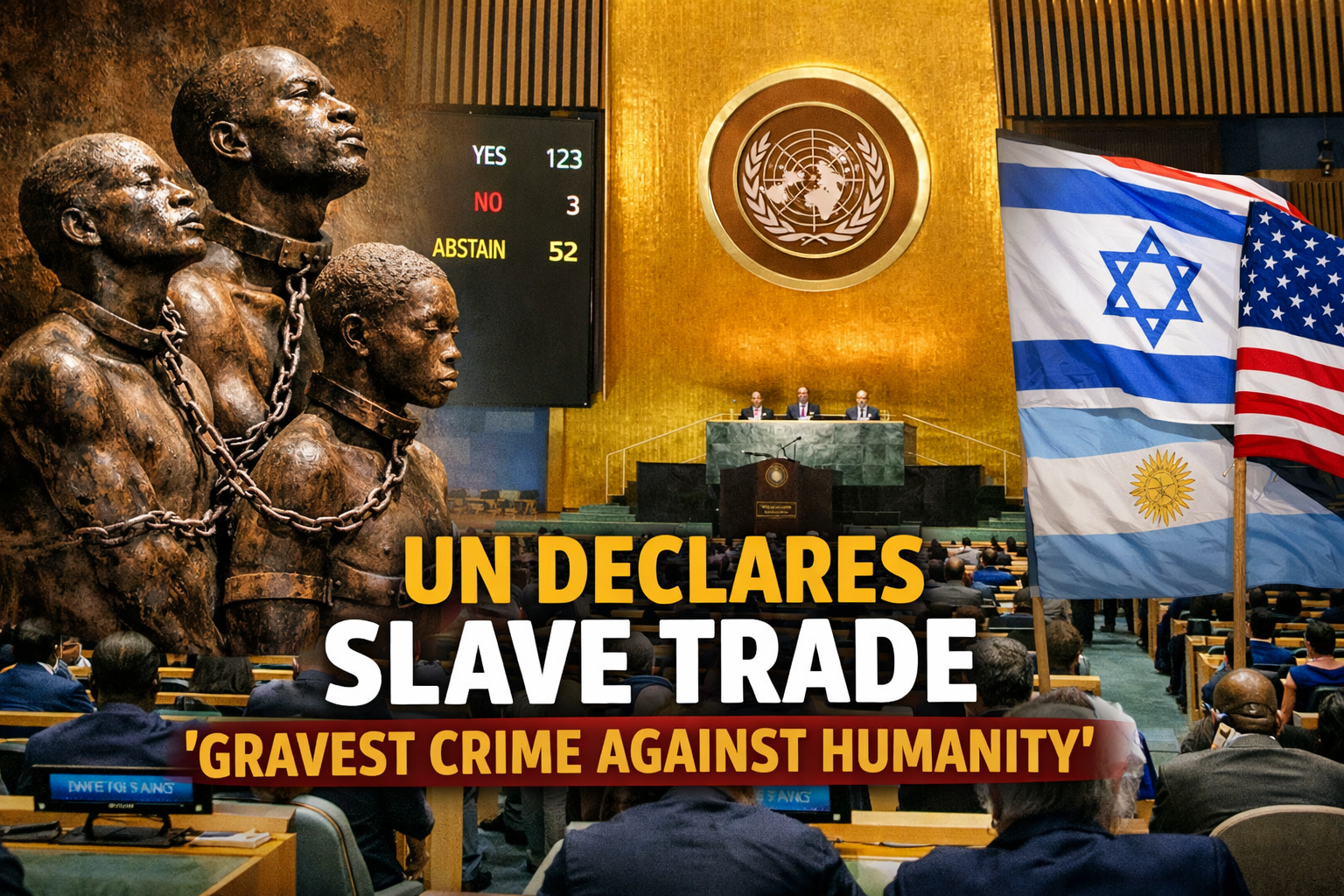
UN Recognizes Transatlantic Slave Trade as ‘Gravest Crime Against Humanity’ — 3 Countries Oppose Resolution
In a powerful moment that’s still making waves around the world, the United Nations has formally recognized the transatlantic slave trade as a crime against humanity. The landmark resolution passed with overwhelming support, but what’s really turning heads is the small group of nations that stood against it.
Only three countries — the United States, Israel, and Argentina — voted “no.” More than 123 nations backed the declaration, while over 50 others, including several European countries, chose to abstain. The vote has ignited fresh conversations about history, justice, and what it means to reckon with the past in the 21st century.
Why This UN Resolution on the Slave Trade Matters
For millions of people of African descent, this isn’t just another UN vote — it’s a long-overdue acknowledgment of one of history’s darkest chapters. Between the 16th and 19th centuries, the transatlantic slave trade forcibly transported an estimated 12 million Africans across the Atlantic. Families were torn apart, entire communities were destroyed, and the brutal system left a lasting legacy of inequality that many argue still affects societies today.
The resolution doesn’t create new laws or demand reparations on its own. Instead, it serves as a global statement: the transatlantic slave trade was a crime against humanity. For activists, historians, and everyday people across the African diaspora, that symbolic weight feels enormous.
What the Vote Actually Looked Like
- 123 countries voted in favor
- 3 countries (United States, Israel, Argentina) voted against
- 50+ countries abstained
Supporters hailed the move as a step toward truth-telling and healing. Opponents, however, raised legitimate concerns about applying today’s legal standards to events that happened centuries ago. They worried that such declarations could open the door to complicated legal claims, diplomatic tensions, or even set a precedent for ranking historical atrocities.
Mixed Reactions Across Africa and the Diaspora
In many African nations and communities in the Americas and Europe, the news was met with a blend of pride and frustration. Pride that the international community finally named the transatlantic slave trade for what it was. Frustration that a handful of powerful nations still couldn’t get behind the declaration.
Civil rights leaders, scholars, and grassroots organizations have welcomed the resolution while calling for real-world follow-through: better education about the slave trade in schools, honest conversations about its economic and social aftermath, and continued dialogue on reparative justice.
What Happens After This Historic UN Vote?
While the resolution itself carries no immediate legal force, experts believe it could become a powerful tool for advocacy. It may encourage:
- Stronger inclusion of slavery’s history in global education curricula
- Increased funding for research and memorial projects
- More open international discussions about systemic inequalities rooted in the slave trade era
Many observers see this as part of a broader global shift toward confronting uncomfortable histories rather than ignoring them. Whether it leads to tangible policy changes or remains largely symbolic, one thing is certain: the conversation about the transatlantic slave trade, accountability, and healing is far from over.
The Bottom Line
The United Nations has drawn a clear line in the sand: the transatlantic slave trade was a crime against humanity. With only three countries voting against the resolution, the world has sent a message — even if that message isn’t unanimous. For millions still living with the echoes of that history, this vote feels like a long-awaited step toward recognition and respect.
What do you think? Does a symbolic UN declaration like this move the needle toward real justice, or is more concrete action needed? Drop your thoughts in the comments — the discussion is just getting started.
Featured image AI-generated. Learn more here