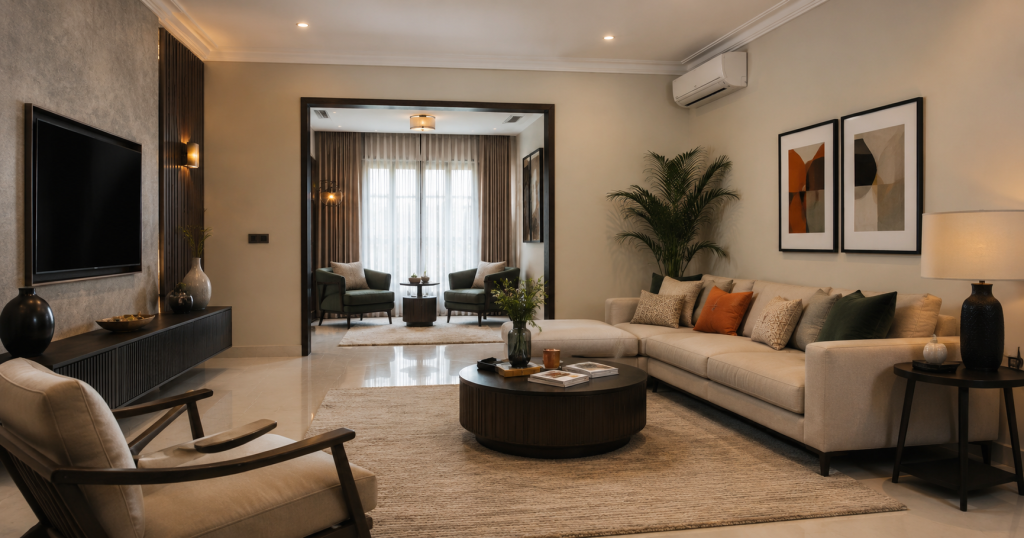
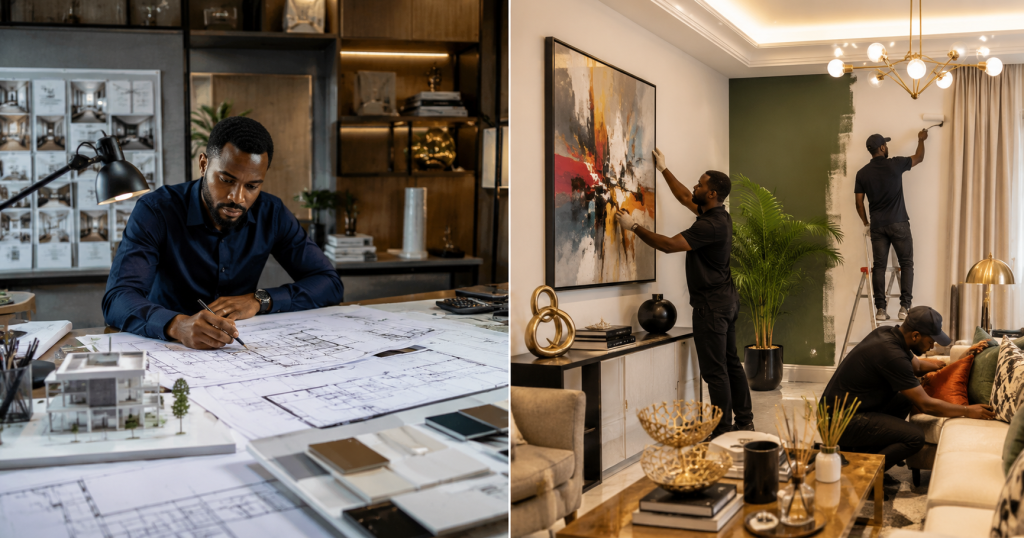
There has always been controversy and heated arguments when it comes to defining who an interior designer is and who an interior decorator is. Most people believe that an interior decorator is the same as an interior designer but that is not exactly true. Though sometimes, just to let sleeping dogs lie, we accept whatever title is pushed on us without questioning it.
The truth is that the difference between these two professions is significant and understanding it matters — both for professionals working in the field and for clients who want to hire the right person for their specific needs. The difference lies mainly in scope, training and what each professional actually changes in a space.
Who Is an Interior Designer?
An interior designer works on the function, structure and overall design of a space. Their work goes beyond how a room looks — they are concerned with how a space works, how people move through it and how it serves the practical needs of the people who use it.
An interior designer may handle space planning which involves determining how rooms, furniture and movement should flow together harmoniously. They work with floor plans and layouts, lighting design, built-in features like kitchens, wardrobes and storage solutions, materials and finishes and sometimes full renovations. They coordinate with architects, builders and contractors to bring their design vision to life within the structural realities of the building.
A practical example helps illustrate this. A client says my living room feels cramped and does not work well. An interior designer would respond by potentially redesigning the entire layout of the space, adjusting the lighting scheme, changing wall treatments, creating integrated storage solutions and guiding a renovation process that may involve structural changes. The result is a space that not only looks different but fundamentally works better.
Interior design in its fullest sense requires formal training in design principles, spatial planning, building codes and technical drawing. In many countries interior designers are required to be licensed professionals with recognized qualifications.
Who Is an Interior Decorator?
An interior decorator focuses on the look and feel of an already existing space. Where the interior designer changes how a space works, the interior decorator changes how a space looks and feels. Their work is primarily aesthetic rather than structural or functional.
An interior decorator handles furniture selection, curtains and blinds, rugs, wall art, paint colors, cushions and accessories, styling and the arrangement of decorative items. They take a space that already exists and works functionally and transform its visual appearance to make it more beautiful, more cohesive and more reflective of the client’s personality and taste.
Using the same practical example — a client says my living room is empty and I want it to look luxurious. An interior decorator would select the perfect sofa, choose a color palette, source artwork, select decorative pieces and style the entire space to create a look of luxury and elegance. No walls are moved, no structural changes are made — but the visual transformation can be extraordinary.
The Overlap and the Confusion
Here is where things get complicated and where much of the controversy arises. There is genuine overlap between the two professions and many talented professionals work competently in both areas. Someone can be both a skilled space planner and an exceptional decorator — the two skill sets are not mutually exclusive.
In Nigeria particularly the term interior designer is used as a general catch-all term even when the person being described mainly does decorating and styling. This is partly a matter of professional perception and partly a reflection of the reality that formal interior design education is less accessible in Nigeria than decorating skills which can be developed through practice, observation and self-study.
I personally have had to clarify this distinction many times and it remains something that many people never quite get right. It can be both funny and genuinely frustrating. I have encountered situations where an interior decorator is dismissed as merely a curtain hanger or someone who decorates event venues — a misunderstanding that dramatically undervalues the skill, creativity and expertise that professional interior decorating requires.
This misunderstanding is partly why I have come to introduce myself as someone specializing in interior and exterior beautification. This term more accurately captures the full scope of what a professional decorator does without the baggage of confusion that comes with the designer versus decorator debate. Because here is something that many people miss — an interior decorator’s expertise does not end at interior matters just because the word interior appears in the title. Many skilled decorators work extensively on exterior spaces as well.
The Problem of Unqualified Practitioners
There is another side to this debate that deserves honest discussion. The interior design and decoration field in Nigeria has been infiltrated by people who lack the prerequisite knowledge and training to practice professionally but who project themselves as interior designers regardless. This happens sometimes out of genuine ignorance and sometimes as a deliberate attempt to command higher fees and greater respect than their actual skills warrant.
This is damaging to the profession as a whole. When unqualified practitioners deliver poor results it reflects badly on all professionals in the field and makes clients more skeptical and less willing to pay fair prices for genuine expertise. The solution is greater professionalism, better industry standards and more public education about what to look for when hiring an interior professional.
Anyone can be trained and develop competence in both interior design and interior decoration provided they acquire the necessary knowledge and put in the work to develop genuine skill. The key word is trained. The field rewards those who invest seriously in their development and punishes those who try to shortcut their way to professional status.
A Simple Way to Remember the Difference
If you want a simple rule to help you remember the distinction think of it this way. A designer changes how the space works. A decorator changes how the space looks. Both are valuable. Both require real skill. And both deserve respect and appropriate compensation for their expertise.
When hiring an interior professional be clear about what you actually need. If your space has functional problems — poor layout, inadequate storage, bad lighting — you may need an interior designer. If your space works well but looks uninspiring, empty or incoherent, an interior decorator is likely the right professional for your needs. And if you find a talented professional who does both well consider yourself fortunate.
The work of a skilled interior decorator in a nutshell is to ensure that your space has a look that cannot be ignored. A space that makes visitors stop and say wow the moment they walk in. A space that reflects your personality, your taste and your aspirations. That is what great interior decoration achieves and it is no small thing.
Transform Your Space With Professional Beautification Services
At GTV Spaces we specialize in making homes and commercial spaces truly beautiful. We produce quality and unique paints for your buildings, handle painting professionally, install window blinds and quality curtains and offer complete interior and exterior beautification services.If you want that beautiful home or office space that cannot be ignored contact us today: gtvdailyblog@gmail.com