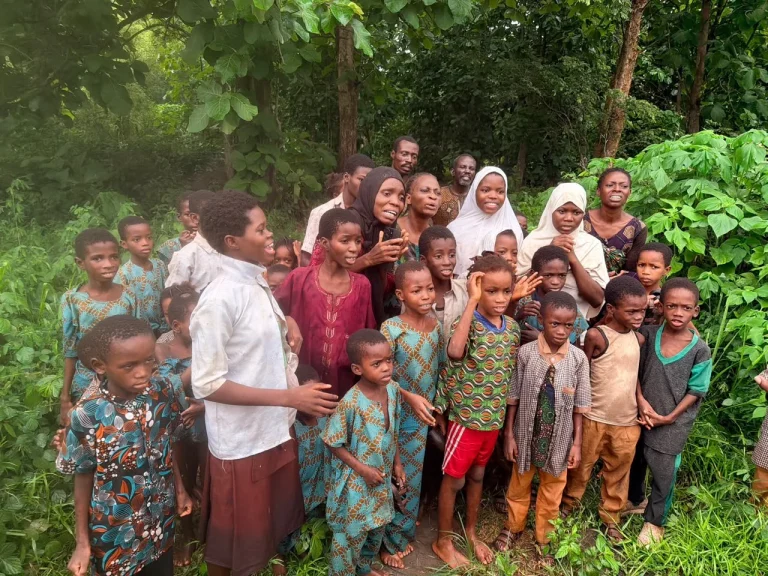
A community torn apart by fear and grief erupts in celebration as security forces rescue the surviving abducted pupils and teachers from Oriire Local Government Area — according to the Presidency, without any concession to the kidnappers.
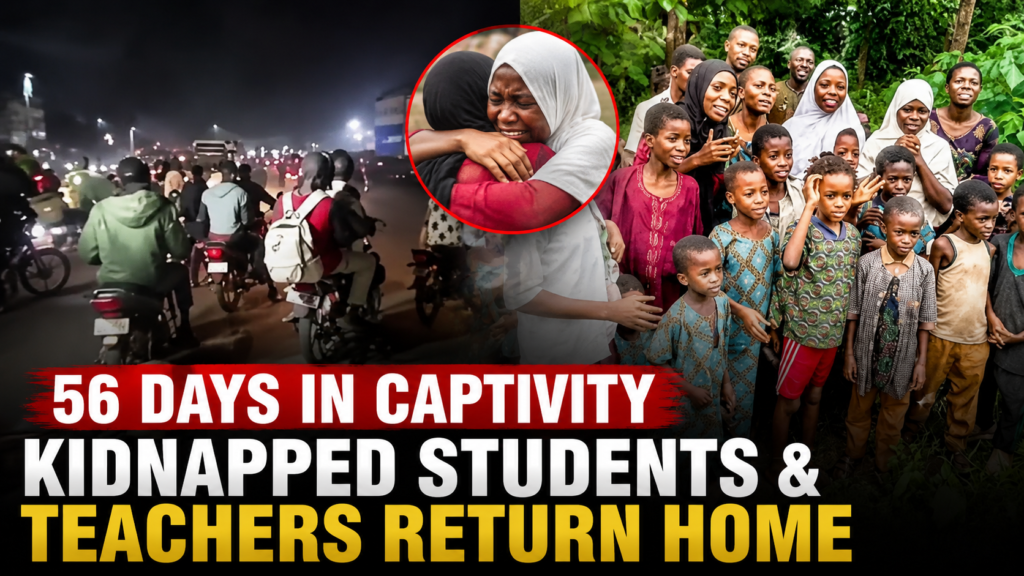
On Friday, July 10, 2026, Ogbomoso, Oyo State, erupted in celebration as residents welcomed home the students and teachers rescued after spending 56 days in captivity following a mass school abduction. Streets that had been heavy with grief and tension for nearly two months suddenly filled with music, dancing, tearful embraces, and loud praises to God. The news had finally come: the surviving abducted schoolchildren and teachers had finally been rescued and reunited with their families.
It was the moment an entire community — and indeed an entire nation — had been waiting for since May 15, 2026, when armed bandits shattered the peace of three schools and tore dozens of children from the arms of their families.
It was the moment an entire community — and indeed an entire nation — had been waiting for since May 15, 2026, when armed bandits shattered the peace of three schools and tore dozens of children from the arms of their families.
The Day Ogbomoso Stood Still — And Then Erupted
The moment the announcement broke, Ogbomoso transformed. According to residents who spoke with journalists, people immediately parked their vehicles, stepped off their motorcycles, and gathered in the streets to celebrate. Okada riders, market traders, students, mothers, fathers, the young and the old — all stopped whatever they were doing and joined the spontaneous outpouring of relief and thanksgiving that swept through the five local government areas that make up the Ogbomoso zone.
One resident, Akinkunmi Oyelade, captured the raw emotion of the moment perfectly when he told journalists:
“I initially did not believe it, but when I saw scores of Okada riders and the travellers parking their vehicles and praising them, I then believed that the information was true.”
Another indigene, Kemi Adeniyi, spoke with a mixture of joy and fierce resolve:
“I am more than delighted with this great news. However, what happens to those who kept our family members for almost two months? They must not go unpunished.”
The jubilation was not merely the relief of one family or one village. It was the collective exhale of a community that had lived under a shadow of fear, grief, and uncertainty for 56 agonising days.
How the Rescue Happened
The rescue was confirmed on Friday by Bayo Onanuga, Special Adviser to President Bola Tinubu on Information and Strategy, who announced on his official X account:
“Finally, all the kidnapped pupils and teachers in Oriire, Oyo State, have been rescued by our security agencies.
“The operation was a coordinated, intelligence-driven joint effort involving the Nigerian military, the Department of State Services (DSS), and the Nigeria Police Force. Eight suspected members of the kidnapping gang were arrested during the operation and are now in DSS custody. Several others were neutralised during the rescue mission.
According to the Presidency, the rescue was carried out without any negotiation or concession to the abductors. The kidnappers had demanded the release of a notorious gang kingpin currently being prosecuted for his crimes. The government refused. The operation ultimately secured the safe return of the surviving victims without meeting the kidnappers’ demands.
President Tinubu, in a statement issued through Onanuga, said:
“I am profoundly happy that our security forces successfully rescued the abducted pupils and teachers from Oriire, Ogbomoso in Oyo State today after a military, police and intelligence-driven operation that neutralised some of the terrorists that perpetrated the evil act and the arrest of eight of them.”
The President also directed emergency agencies to provide immediate medical attention, welfare support, and psychological rehabilitation for all rescued victims, recognising that physical rescue is only the beginning of healing.
Oyo State Governor Seyi Makinde, visibly moved, told Channels Television:
“It is such a big relief for all of us. Right now, I am overjoyed and can hardly say much.”
The Ordeal: 56 Days of Darkness
To fully appreciate the joy of Friday’s celebrations, one must understand the depth of the horror that preceded it.
On the morning of Friday, May 15, 2026, heavily armed men riding motorcycles launched coordinated attacks on three schools in the Yawota and Ahoro-Esinele communities of Oriire Local Government Area, Oyo State. The schools targeted were:
- Baptist Nursery and Primary School, Yawota
- L.A. Primary School, Esinele
- Community Grammar School, Ahoro-Esinele
During the attack, Assistant Headmaster Joel Adesiyan was fatally shot while trying to protect the pupils in his care. The gunmen then abducted 39 pupils — including very young children and toddlers — along with seven teachers and the principal of Community Grammar School, Mrs. Rachael Alamu, before marching them deep into the forest in the direction of the Old Oyo National Park axis.
Later, during the 56 days in captivity, another teacher — mathematics teacher Michael Oyedokun — was reportedly killed by the kidnappers, deepening the nation’s grief and outrage.
The abduction sent shockwaves far beyond Oyo State. It represented a disturbing escalation of bandit activity into Nigeria’s southwest — a region that had previously been considered relatively safer than the northwest and northeast. The fact that armed men could walk into three schools simultaneously, in broad daylight, and abduct dozens of children and their teachers was a sobering reminder of the security challenges the country continues to face.
A Nation United in Outrage and Solidarity
The response from Nigerians and their institutions was swift and sustained.
The Nigeria Union of Teachers (NUT) condemned the attack as “barbaric and inhuman,” warning that persistent attacks on schools were creating widespread fear, emotional trauma, and panic among teachers, pupils, parents, and communities across the country. On May 29, 2026, the national NUT leadership directed its Oyo State wing to begin an indefinite withdrawal of services. By June 1, public primary and secondary school teachers across Oyo State had commenced the strike — one of the most significant industrial actions triggered directly by a security crisis in recent Nigerian history.
The strike lasted an entire month before the NUT suspended it on July 1, 2026, following engagements with the Oyo State Government and assurances of improved security and rescue efforts. Teachers returned to classrooms on July 2 — just days before the rescue that the nation had been praying for finally came.
As recently as July 5, the Chief of Army Staff, General Waidi Shaibu, had told the public that troops were making “tremendous progress” in efforts to free the victims. His words were proven true just five days later.
Why This Matters Beyond the Celebration
The rescue of the Oriire schoolchildren and teachers is more than a security success story — it is a moment of profound significance for Nigeria and for the African continent.
In a region and a country where kidnapping cases too often end in tragedy, prolonged negotiations, or quiet despair, this outcome stands out. The government held firm, refused to bow to the kidnappers’ demands, and secured the safe return of the surviving victims through a coordinated security operation. That is not a small thing. It is a demonstration that Nigerian security forces, when properly coordinated and resourced, are capable of the kind of decisive, intelligence-driven operations that produce results.
But the celebration must not blind Nigeria to the harder questions this ordeal raises. How did armed men on motorcycles manage to simultaneously attack three schools in broad daylight? What does this say about the security architecture of Oyo State and the southwest more broadly? Who are the bandits increasingly establishing themselves in the forests of the region, and what conditions — poverty, unemployment, weak forest border controls — are allowing them to thrive?
President Tinubu has reportedly approved the recruitment of 1,000 forest guards for Oyo State, and discussions are reportedly underway about establishing a permanent military base in the Oriire area. These are welcome steps. But they must be followed through — not just announced.
The family of Michael Oyedokun, the mathematics teacher who was killed in captivity, deserves justice. His killers must be held accountable. The eight suspects now in DSS custody must face the full weight of Nigeria’s law. And the families who endured 56 days of agony must receive the psychological and financial support they need to rebuild.
Although the rescue marks the end of a traumatic chapter, experts note that many of the children and teachers may require months of psychological counselling and medical support to recover fully from the experience. Their reintegration into school and everyday life will likely be a gradual process.
The Nigerian Spirit: Unbroken
But on this day, July 10, 2026, none of that dampens the joy of Ogbomoso.
Communities across the world have endured terrorism, kidnapping, and the loss of loved ones. Not all experience the relief Ogbomoso witnessed on Friday—a day when anxious waiting finally ended and families were reunited with those who survived the ordeal.
Ogbomoso got that Friday. And the dancing in the streets, the praises rising to heaven, the tears of joy streaming down the faces of mothers and fathers who had spent 56 nights not knowing if they would ever hold their children again — all of it is earned. All of it is deserved.
The Nigerian spirit is many things. It is resilient, it is resourceful, and it is — on days like this — spectacularly, beautifully, defiantly joyful.
Welcome home.
Disclaimer: This article is based on verified reports from multiple credible Nigerian news sources including Channels Television, Punch, Vanguard, BellaNaija, The Sun, and official statements from the Nigerian Presidency
Photo Credit: Bayo Onanuga.