Few names from history are as closely tied to wealth as Mansa Musa. He ruled the Mali Empire in the early 14th century, and his control of gold, salt and trade routes stretched across West Africa. In 1324 he set out on a pilgrimage to Mecca so lavish that it was recorded by writers in Cairo and Damascus, and it changed how the Arab world and Europe saw West Africa.
The Empire He Inherited
Mansa Musa came to power around 1312 and is generally believed to have ruled until about 1337. Mali’s wealth rested on gold from the Bambuk and Bure regions and on the trans-Saharan trade. Gold moved north to the Mediterranean, while salt, copper and other goods moved south. Whoever controlled these routes held much of the region’s economic power.
Mali was a federation of many peoples and cities, held together by taxation, trade and a shared administration. Mansa Musa expanded its territory, which helped him manage the large revenues that came in from trade.
The Pilgrimage of 1324
The most famous episode of his reign was his hajj, the pilgrimage to Mecca. Accounts from chroniclers of the time describe a caravan of about 60,000 people, including attendants and servants, along with a large quantity of gold. Historians give a range for the numbers, and the details come mainly from Arab writers, most notably the Egyptian historian al-Umari.
Mansa Musa spent generously along the way. In Cairo, historical accounts describe Mansa Musa distributing so much gold that its value reportedly declined in the local market. Some accounts suggest that the effects lasted for years, although the precise economic impact and recovery period are difficult to establish. Historians debate the exact totals, since figures in the sources vary. The scale of the journey, however, is well attested in multiple accounts.
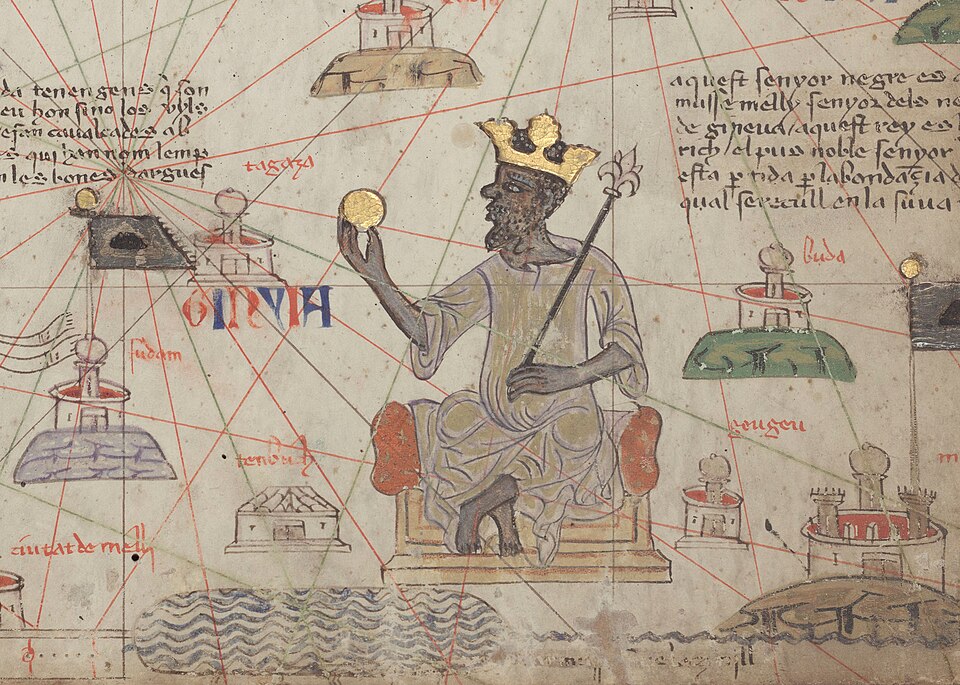
The pilgrimage also had a diplomatic effect. Mali became known across the Muslim world, and Mansa Musa’s name began to appear on European maps.
Building an Empire of Learning
On his return, Mansa Musa invested in architecture and scholarship. He is said to have brought back scholars from his journey, including the Granada-born poet Abu Ishaq al-Sahili. Some sources credit al-Sahili with designing buildings in Timbuktu, including the Djinguereber Mosque, though historians disagree about how much of this is documented.
Timbuktu became a centre of learning under his rule and in the centuries after. Scholars studied law, astronomy, medicine and Islamic theology, and the city’s manuscript tradition is one of the most important in African history. Many of these manuscripts survive today in private and community collections in Mali.
Later travellers recorded what they found there. The Moroccan explorer Ibn Battuta visited Mali in the 1350s and wrote about its security, its people and its order.
How He Appears in Europe
Mansa Musa’s reputation reached Europe as well. The Catalan Atlas, made in 1375 by mapmakers in Majorca, shows him as a ruler of great wealth, and it became one of the most widely known images of his reign.
For centuries, though, African history was often told through European eyes, and Mali’s achievements were sometimes reduced to myth or a footnote. Modern historians have worked to correct that picture using Arabic sources and local records.
Why His Story Still Matters
Mansa Musa is often called the richest man in history. Calculating his wealth in modern terms is difficult, and any figure should be treated as an estimate. What is clear is that his reign shows how African empires managed trade, religion and state power, and that Africa’s influence on world history goes back centuries before colonial rule.
Sources
- Encyclopaedia Britannica, “Mansa Musa”
- UNESCO World Heritage Centre, “Timbuktu”
- Nehemia Levtzion, Ancient Ghana and Mali