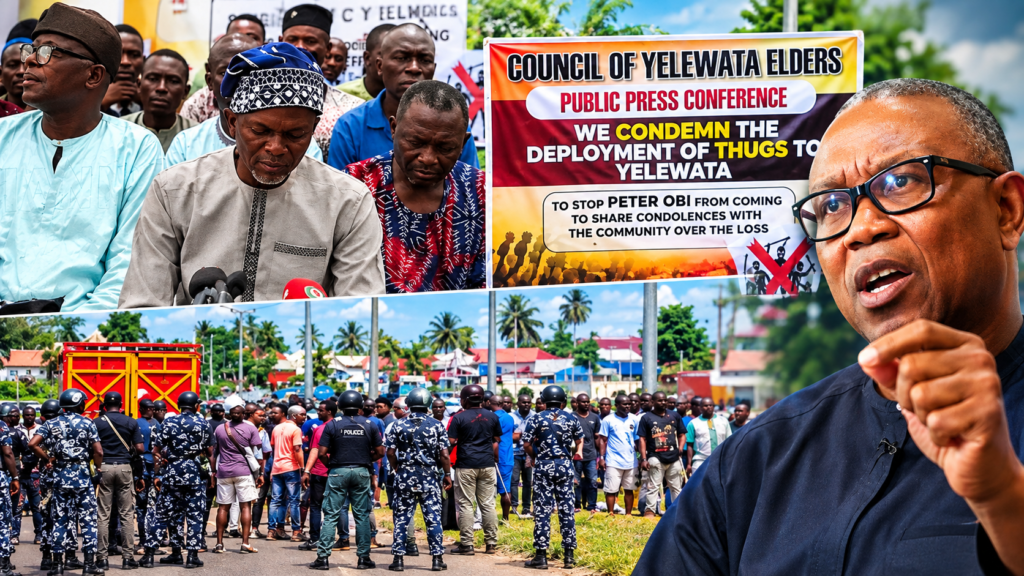
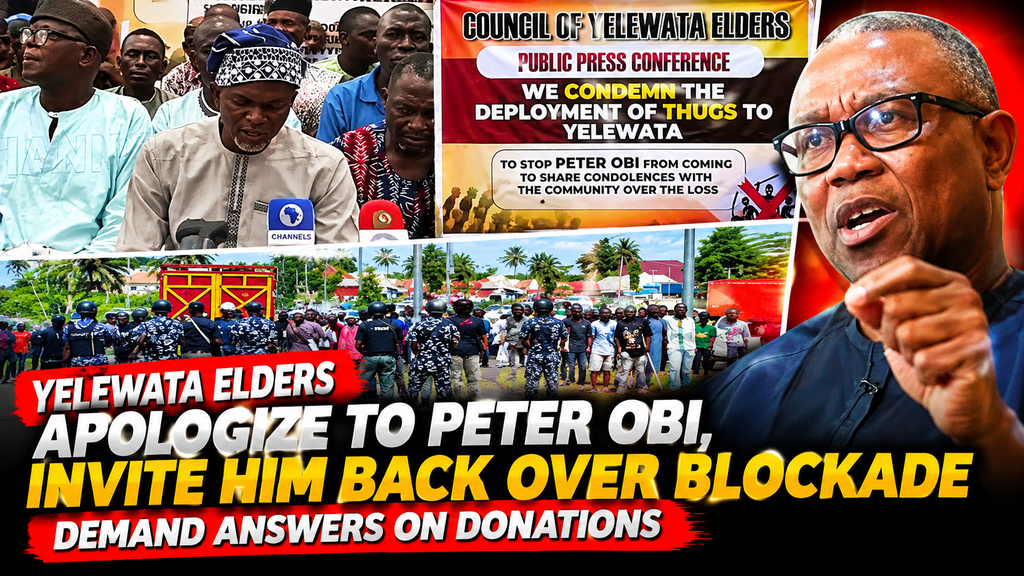
Yelewata elders in Benue State have publicly apologised to Peter Obi and extended a formal invitation for him to return to their community, while demanding greater transparency over donations and reconstruction efforts meant for victims of the June 2025 massacre.
The statement, delivered during a press conference at the Yelewata Genocide Memorial Hall and reported by Channels Television, follows the disruption of Obi’s planned visit to the community earlier in September 2026.
The development has drawn fresh attention to the humanitarian challenges still facing Yelewata, as well as the political significance of Obi’s movements ahead of the 2027 general elections.
How Peter Obi’s Convoy Was Blocked in Benue
Earlier in September 2026, Peter Obi arrived in Makurdi with the intention of travelling to Yelewata in Guma Local Government Area of Benue State.
His planned visit was aimed at offering condolences to families affected by the deadly June 2025 attack and showing solidarity with residents still dealing with the aftermath of the tragedy.
However, shortly after leaving the airport area, Obi’s convoy was stopped along the Makurdi-Gboko federal highway by a group of youths who blocked the road and demanded that he turn back.
Obi chose not to force his way through the blockade and subsequently returned.
He later described the incident as concerning and called on security agencies to intervene, questioning the place of such actions in a democratic society.
The Benue State Government denied involvement in the incident and described allegations linking it to the blockade as unfounded.
The incident nevertheless attracted condemnation from political figures and civil society voices, with concerns raised about political tolerance and the freedom of political actors to move around the country as the 2027 elections approach.
Original Footage/Source: Channels Television
Why Peter Obi Went to Yelewata
Peter Obi’s planned visit came against the backdrop of the devastating attack on Yelewata in June 2025, which claimed more than 270 lives.
The attack left families grieving, destroyed homes and displaced residents, while the community has continued to face the consequences of the violence more than a year later.
Obi had therefore planned to visit the affected community, meet residents and sympathise with families who lost loved ones.
The Yelewata elders later made clear that they viewed the proposed visit as an expression of solidarity with the community.
Peter Obi’s Political Journey From 2023 to 2027
The Yelewata incident is also taking place against the backdrop of Peter Obi’s growing political profile ahead of the 2027 presidential election.
Obi was the presidential candidate of the Labour Party in the 2023 general election, where he emerged as one of the major contenders against Bola Ahmed Tinubu of the All Progressives Congress (APC).
Tinubu was subsequently declared the winner of the 2023 presidential election.
Obi’s strong showing in the election, particularly among younger voters and in several states across the South and Middle Belt, established him as a major opposition figure in Nigerian politics.
Since the 2023 election, Obi has remained active on issues including governance, insecurity and economic hardship.
He is now the presidential candidate of the Nigeria Democratic Congress (NDC) for the 2027 general election, placing him once again among the political figures attracting significant attention as the country moves towards another presidential contest.
His planned visit to Yelewata was therefore taking place not only in a humanitarian context but also at a time when political activities ahead of the 2027 election are gradually intensifying.
Yelewata Elders Apologise to Peter Obi
Following the disruption of Obi’s visit, the Council of Yelewata Elders gathered at the Yelewata Genocide Memorial Hall for a press conference.
The elders expressed regret over the harassment, embarrassment and inconvenience caused to Obi and members of his delegation.
They said they appreciated his decision to visit the community and stand with residents still living with the consequences of the 2025 attack.
One of the representatives emphasised that Obi had come out of empathy and compassion, seeking to offer condolences and personal support to grieving families.
The elders also distanced the wider Yelewata community from the actions of those who blocked Obi’s convoy.
They made it clear that the people of Yelewata did not reject Obi and instead extended a fresh invitation for him to return to the community.
Elders Demand Transparency Over Donations and Reconstruction
A major part of the elders’ statement focused on the condition of survivors and the handling of assistance meant for victims of the attack.
The elders called for greater transparency over donations, reconstruction efforts and other forms of support intended for the affected community.
They expressed concern that more than a year after the attack, many residents continue to face difficult conditions and have not received adequate individual assistance.
The community leaders therefore called for a clear account of resources reportedly received for the victims and how such resources have been used in the reconstruction and recovery process.
Their demand has placed accountability alongside the humanitarian concerns surrounding Yelewata, particularly as residents continue to deal with the impact of the 2025 tragedy.
Fresh Invitation for Peter Obi to Return
After apologising to Obi, the Yelewata elders formally invited him to return to the community.
They expressed the hope that he would accept the invitation and have an opportunity to meet residents and families affected by the attack.
The invitation also provides Obi with another opportunity to complete the visit that was disrupted when his convoy was stopped on the way to Yelewata.
Human rights lawyer Franc Utor also featured in the Channels Television report, offering commentary on the wider implications of the incident.
What the Yelewata Incident Means Ahead of 2027
The elders’ intervention has shifted attention from the convoy blockade alone to the wider humanitarian situation in Yelewata.
By apologising to Peter Obi, inviting him back and demanding transparency over donations and reconstruction efforts, the community leaders have placed both reconciliation and accountability at the centre of the latest development.
The incident has also highlighted the increasingly sensitive political environment surrounding the 2027 general election, particularly as major political figures begin engaging communities across Nigeria.
For Yelewata residents, however, the central issue remains the lasting impact of the 2025 attack and the need for meaningful support and reconstruction.
As of the Channels Television report, Peter Obi had not publicly indicated whether he would accept the elders’ invitation to return to Yelewata.
The community’s invitation and demand for transparency now place the focus on whether Obi will return and whether the concerns raised by the elders over assistance and reconstruction will receive a substantive response.